
Emergency Air Duct Cleaning Near Me: What Sedgefield Homeowners Should Do First
If smoke from a kitchen fire entered your return air system, running your HVAC while you wait for a cleaning crew will distribute char particles and odor compounds through every room in the house. Turn it off first. Here’s what comes next. Most “emergency” duct calls in Sedgefield aren’t emergencies at all – they’re urgency dressed up in panic. The handful that are real share three traits: a contaminant source, a path into the air-handling system, and a reason to act before a routine appointment. Get those three straight and the first hour becomes obvious.
What Actually Counts as an Emergency Duct Cleaning Situation in Sedgefield?
Three scenarios genuinely qualify, and only three. Everything else can wait for a scheduled visit without making the problem worse.
- Post-fire smoke contamination. A kitchen fire, a flue backdraft, or a small electrical fire that got smoke into the return air duct. Char particles are acidic, they settle into duct lining, and they carry odor compounds that keep off-gassing for months. Every hour the blower runs, more of it cycles through living space.
- Sewage or flood water intrusion into the air handler. Groundwater rising into a crawlspace that houses an air handler, or a sewer backup reaching the mechanical closet. This is a biological and moisture event, not a dust event. Wet insulation inside an air handler is a problem on a clock.
- Active mold growth you can confirm. Visible colonies on a plenum or return plenum, or air testing that comes back positive. “Musty smell in Sedgefield” is not the same as confirmed mold growth. It might be condensation on a coil, a damp return chase, or a decaying filter. We’ve seen homeowners spend money on duct cleaning for what turned out to be a refrigerator gasket.
Urgent-but-not-emergency covers the rest: heavy dust after a renovation, a pest nest found in a return, a dryer vent that’s been overlooked for years. Those belong on the schedule, not at the top of a panic list.
The Shutdown Protocol: What to Do in the First 60 Minutes
Turn the system off at the thermostat first, then at the air handler disconnect if you can reach it safely. That order matters because the thermostat only cuts the call for conditioning; the air handler disconnect is the actual power isolation. If you’re not confident identifying it, don’t go poking inside the mechanical closet – a call to (833) 468-5694 is quicker than a hospital visit.
- Kill the air handler. Thermostat to off, then the disconnect switch at the unit.
- Close the doors to rooms with return grilles. It limits air movement between zones that no longer have circulation.
- Open windows on the opposite side of the house from the contamination source. Cross-ventilation without pulling air through the affected ducts.
- Bag the affected return grille. A heavy trash bag and painter’s tape over the grille face stops settling particles from dropping back into the room.
- Don’t run fans or portable AC units. They push the same air around. A box fan pointed at a contaminated return is the opposite of helpful.
The home can stay livable without HVAC for a day or two in most Sedgefield weather – open a window, run a standalone fan in a room you’ve isolated, and let the crew handle the system. What you should not do is anything inside the ductwork itself. Post-fire char, sewage contamination, and mold growth are not shop-vac projects. The safety concern isn’t just dirt – it’s what you’ll aerosolize while disturbing it.
Document Everything Before Anyone Touches the Ducts
Homeowner’s insurance decisions on smoke and water contamination hinge on what was captured before remediation. Once cleaning begins, the evidence is gone. If you may file a claim, photograph and timestamp it now.
- Wide shots of each affected room showing the contaminant visible on walls, ceilings, and grilles.
- Close-ups of the return grille face and the visible duct interior where you can reach it with a flashlight.
- The air handler exterior, including any water staining, corrosion, or visible growth.
- Metadata matters – use a phone camera with location and time stamps enabled, not a screenshot, not a scanned photo.
- Any receipts, remediation estimates, or service invoices related to the event.
- A short written timeline: when you noticed it, what you turned off, what you did before the crew arrived.
Adjusters look for source confirmation, scope, and a documented chain of events. A single timestamped photo of a smoke-stained return grille the night of the fire carries far more weight than a verbal description at the end of a claim. If your policy requires pre-approval before remediation, call your carrier before the crew starts – not after.
Why Emergency Duct Cleaning Is a Different Scope Than Routine Cleaning
Routine air duct cleaning is about accumulated household dust, and it’s mostly a matter of getting agitation and extraction right. Emergency cleaning is about a specific contaminant with a defined removal endpoint. Those are different jobs.
The scope usually includes high-efficiency particulate extraction targeting the specific contaminant, containment so nothing migrates to unaffected rooms, an antimicrobial or encapsulant application at the duct surface where the contaminant has settled, and post-cleaning verification. That last step is what separates a real remediation from a vacuum pass. Verification might be visual inspection of the duct interior, particulate sampling, or both.
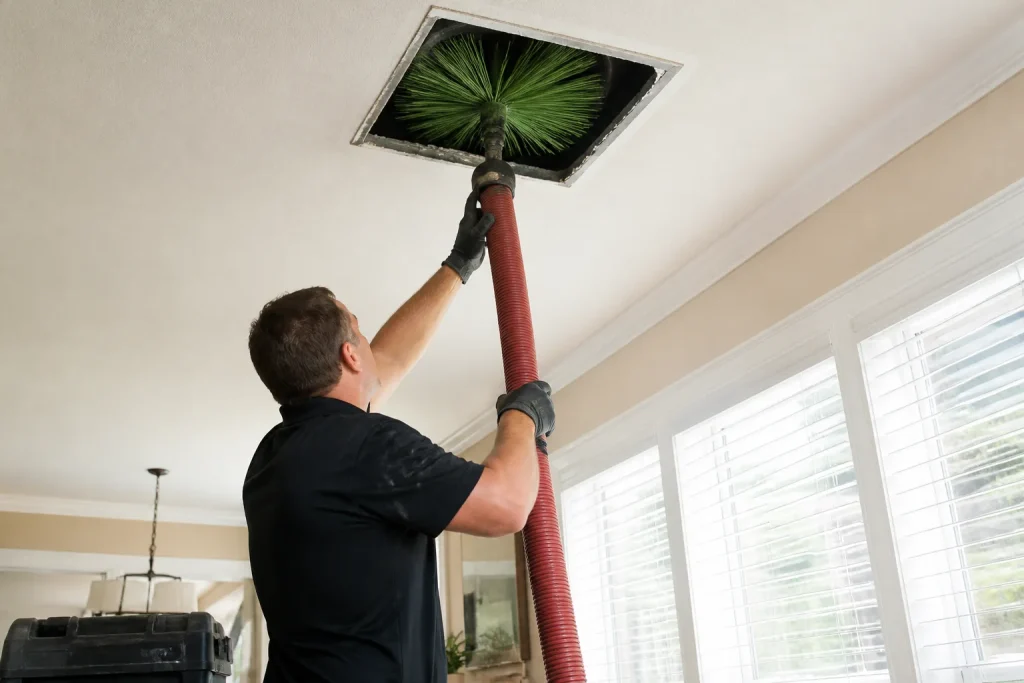
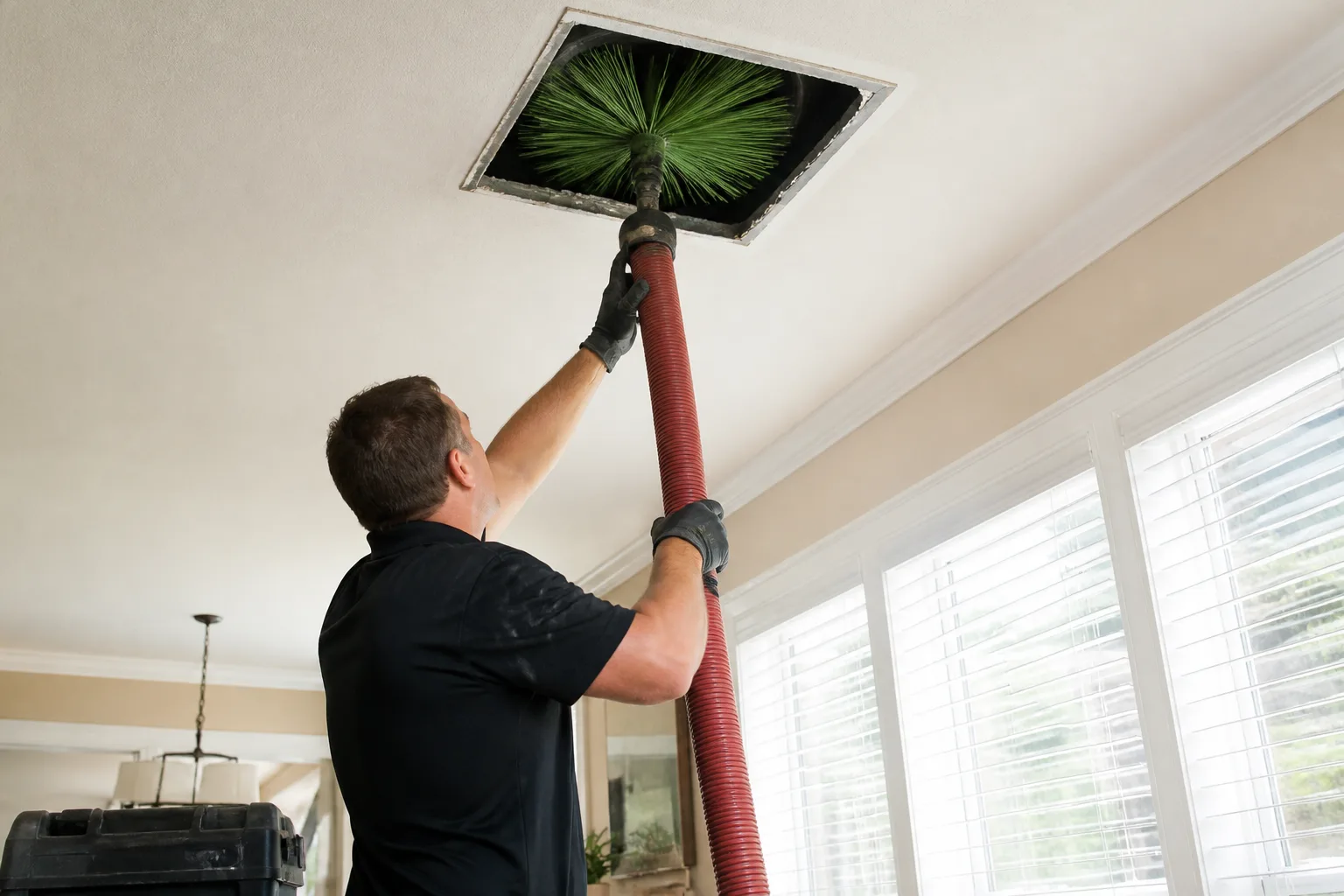
Containment is the piece most overlooked. We bring Abatement Technologies air filtration units to residential emergencies for negative-pressure control – the same tool category used in commercial restoration, not a typical residential duct crew’s equipment. Rotobrush rotary-brush agitation paired with Nikro HEPA-rated extraction is how the contaminants come out rather than getting pushed around. Guardsman antimicrobial treatment after extraction addresses what’s left at the duct surface. The point isn’t brand names, it’s that the equipment has to match the contaminant. You can’t vacuum sewage contamination with the same setup you’d use for household dust.
When to Call a Pro (and What to Ask Before They Start)
Call a professional the moment contamination has entered the air-handling system. That’s not a sales pitch – it’s the practical line. Running a system with contaminated ducts recirculates the contaminant through every room, and no amount of air purifier in the corner fixes what’s moving through the walls. This is also the moment to decide whether your HVAC cleaning should be handled at the same time, since components in the air path will need attention too.
Before the crew starts, ask these four questions:
- Do you carry liability coverage for contamination spread? If a botched containment pushes soot into unaffected rooms, who pays? Their insurance should answer that, not your homeowner’s policy.
- How do you verify the job post-cleaning? Photos, particle counts, or a written inspection report – a real answer, not “you’ll be able to tell.”
- What’s the warranty on odor or mold recurrence? If growth comes back in six weeks, what’s the call-back policy?
- What containment do you use? Negative-pressure units or just a vacuum setup with the doors open? Ask before they arrive.
While you’re at it, have them check the dryer vent cleaning on the same visit – a fire that started in one part of the home often highlights lint and airflow issues elsewhere. One appointment that addresses the full system beats three separate visits from three separate crews. Our technicians have up to 14 years of experience, and our full-system scope means Air Duct Cleaning Sedgefield covers ducts, HVAC components, and vents under one call.
The Bottom Line
True duct emergencies come down to three triggers – post-fire smoke, water or sewage intrusion, or confirmed mold. If you’re in any of those, the sequence is: turn the system off, document with timestamped photos, keep the home livable without running the HVAC, and call in a crew whose equipment matches the contaminant.
Everything else can wait for a scheduled visit. Dust after a renovation, a musty smell you can’t pin down, a dryer vent that’s overdue – those are important but not urgent, and treating them like an emergency only costs you money. If you’re in Sedgefield and need help, Air Duct Cleaning Sedgefield offers free estimates – call (833) 468-5694. We answer 24/7. Fast dispatch from 7am to 7pm, Sunday through Friday. If you’re not sure whether your situation qualifies, ask us – we’ll tell you honestly if it can wait until next week.
Frequently Asked Questions
No. Running the system after a fire pushes char particles and odor compounds through every room. Shut the air handler off at the unit disconnect and leave it off until the ducts are cleaned. If the fire was contained to a pan on the stove and the hood fan carried smoke outside, you may not have a duct problem at all; if smoke visibly entered a return grille, assume it did.
It’s set per job by the written estimate, because scope varies enormously between a small smoke event and a sewage intrusion into an air handler. Routine duct cleaning is a very different price point from emergency remediation with containment and post-cleaning verification. Call (833) 468-5694 for a free estimate – we’ll give you the number before any work starts.
Often yes for post-fire and water-intrusion events, sometimes not for mold growth that insurers attribute to long-term maintenance. The critical step is documenting before cleaning begins – photos with timestamps, a written timeline, and pre-approval from your carrier if your policy requires it. Call your insurance company before the crew starts, not after.
Ask for post-cleaning verification before the crew packs up: interior photos, a written inspection note, or air sampling on a mold job. A reputable emergency crew will give you the documentation without being asked twice. If they hesitate, that’s your answer.
Written by the team at Air Duct Cleaning Sedgefield.
Need Air Duct Cleaning Help?
Call Air Duct Cleaning Sedgefield - the local pro we connect you with is licensed and insured, here with fast help in Sedgefield.
(833) 468-5694