
Last updated November 23, 2026
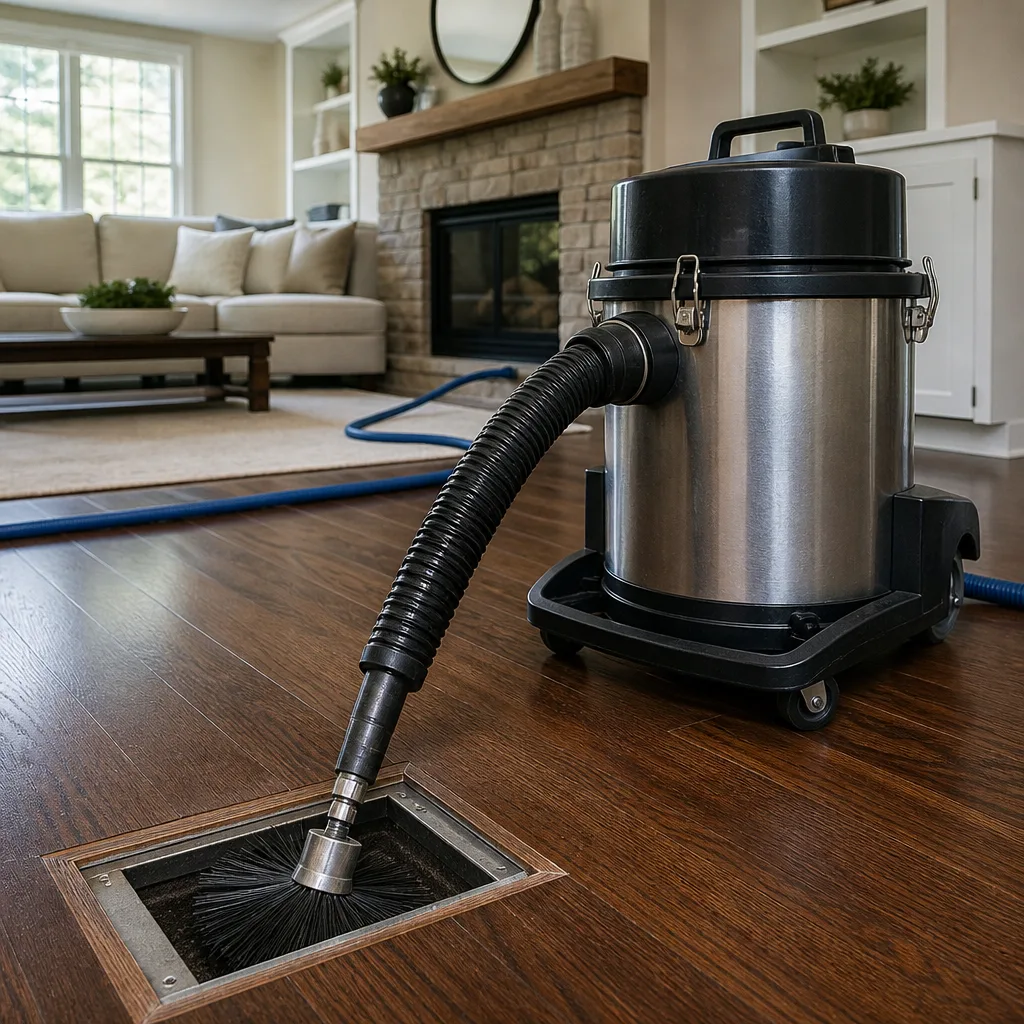 Whole-home duct cleaning
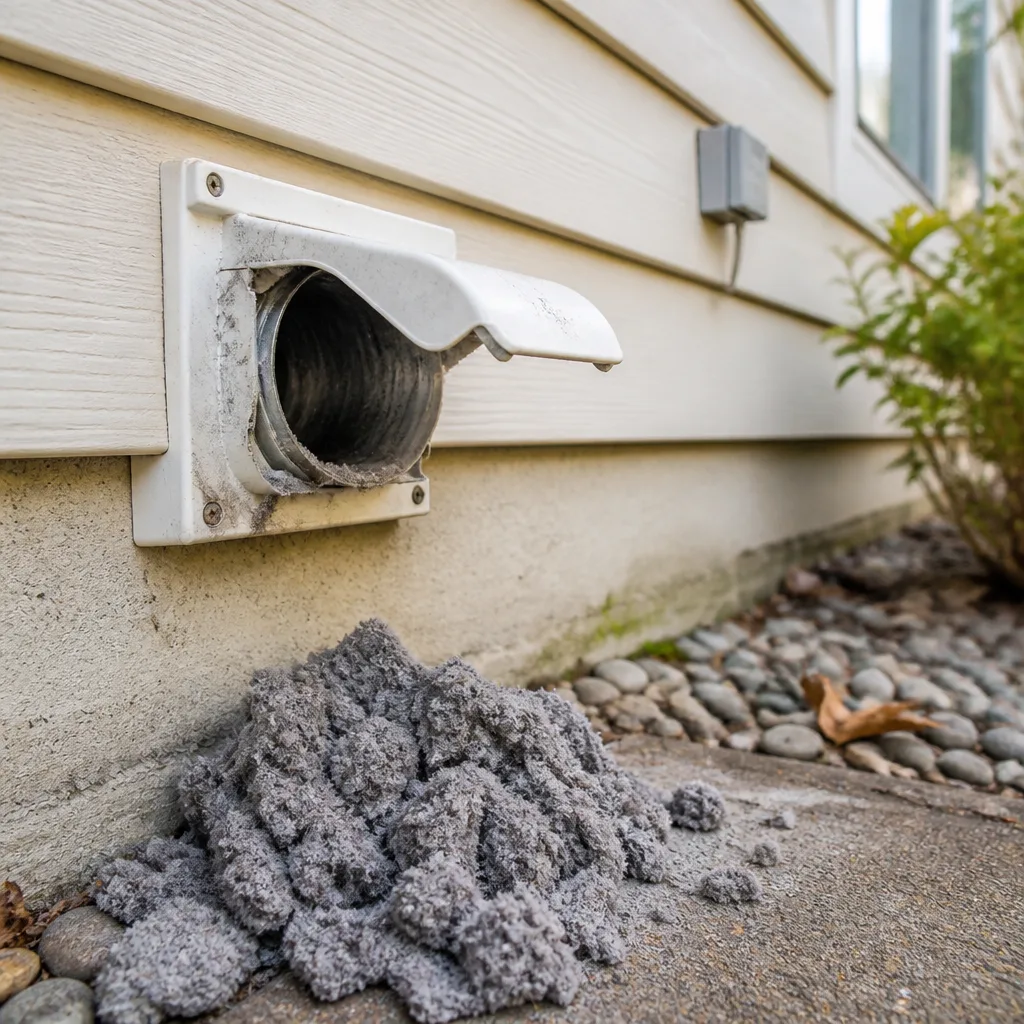 Dryer vent cleaning
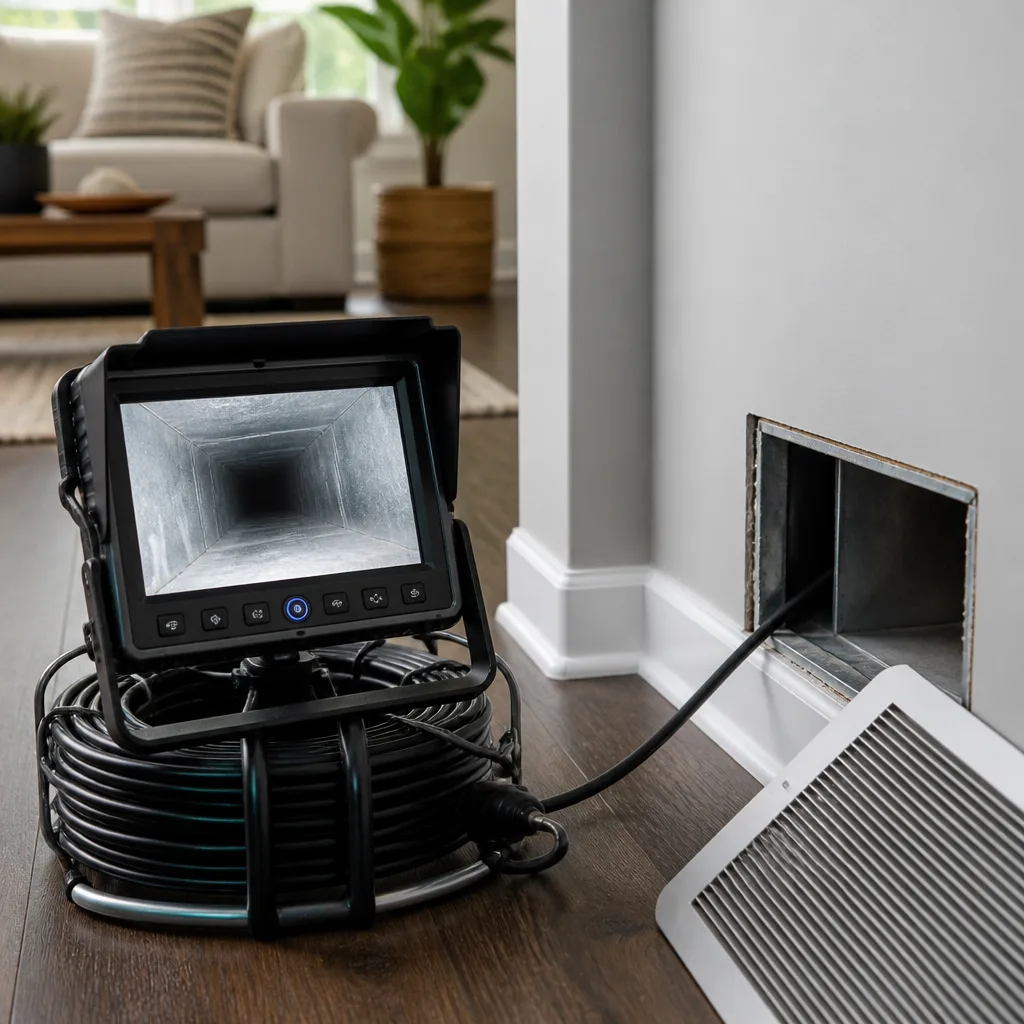 Camera inspection
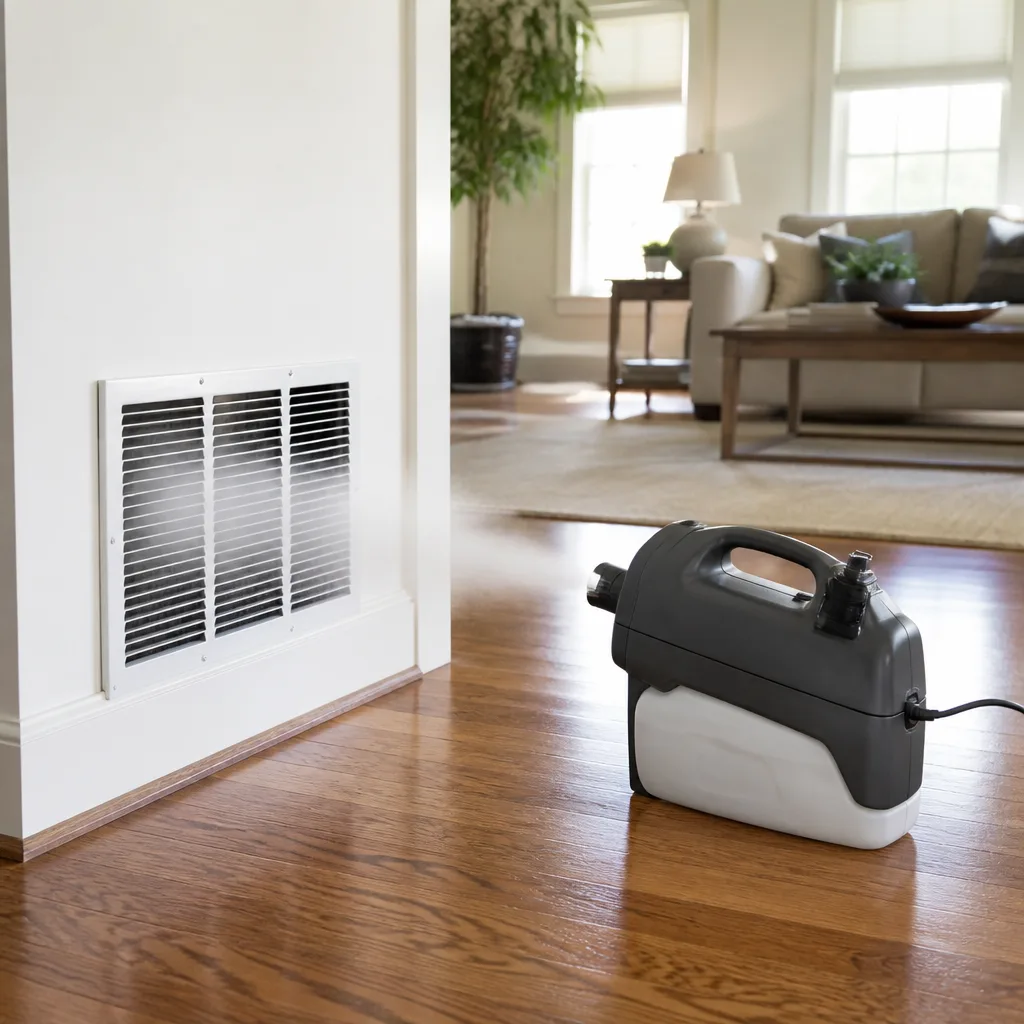 Sanitizing & deodorizing
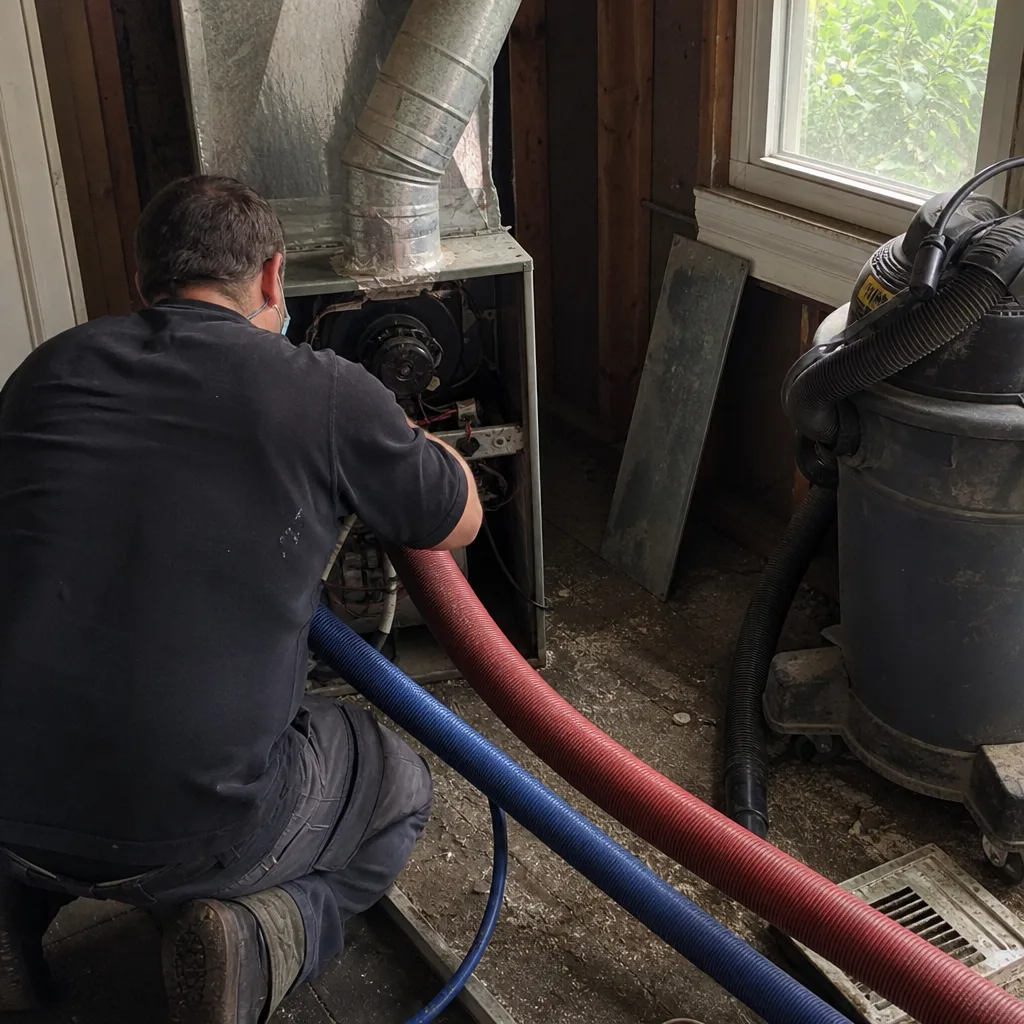
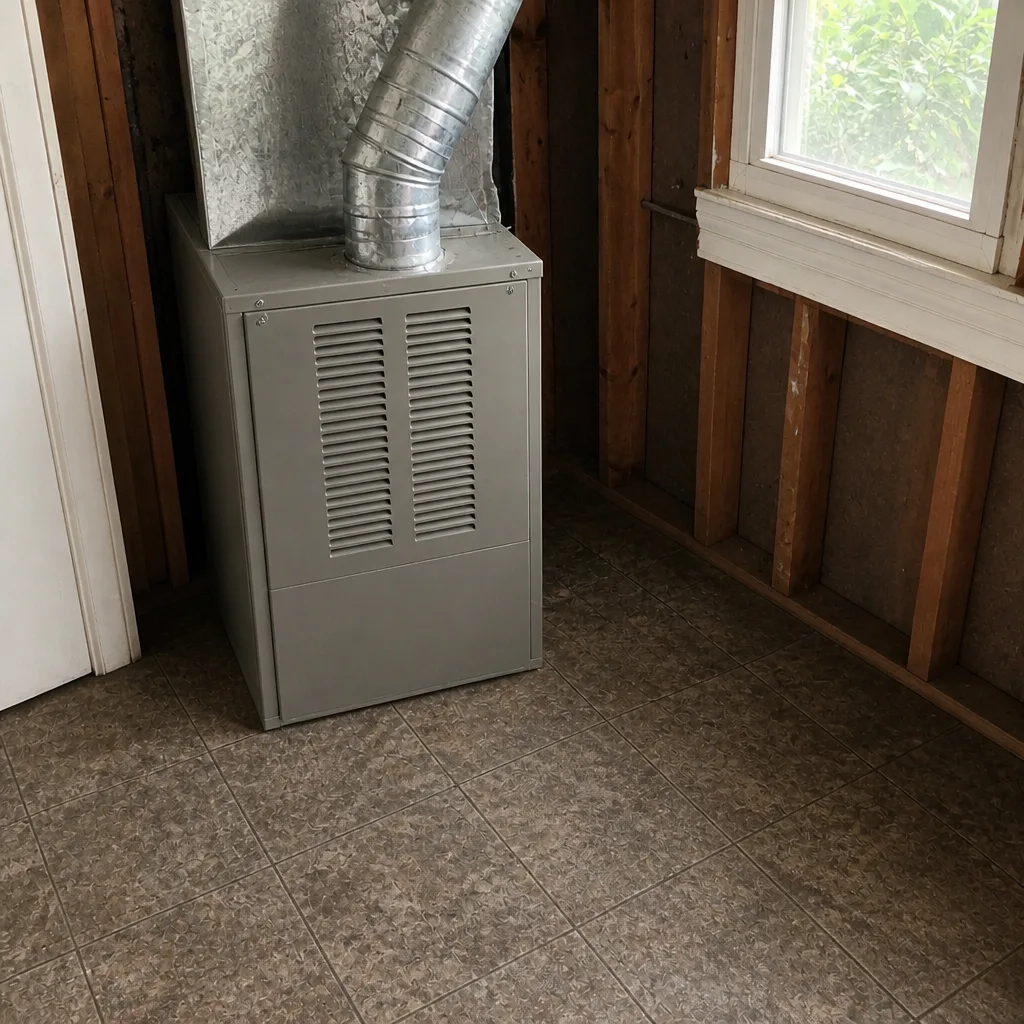
Whole-system duct and dryer vent check with before-and-after photos - you see exactly what came out of your vents
That "$99 whole-house special" is a bait ad - the real number appears once they are in your hallway, or the "clean" is a shop-vac at the register. We photograph the inside of your ducts before and after instead.
Air Duct Cleaning Permits, Codes & Inspections in Sedgefield, NC: What You Need to Know
Most air duct cleaning in Sedgefield needs no permit at all. That’s the part people expect to hear. The part that surprises homeowners is the next sentence: the moment a contractor cuts a new access panel into a trunk line, reworks a flex duct connection, or mounts a UV germicidal light inside the air handler, the job stops being maintenance and becomes mechanical work that North Carolina’s building code covers. A cleaning crew that quietly made those changes can leave you holding an unpermitted modification, and it tends to surface at the least convenient moment: the home inspection during resale. This guide explains where the line sits in Guilford County, what duct repair and sealing actually trigger, who’s licensed to pull those permits, and what to get in writing before anyone touches your system.
Quick Answer
Routine air duct cleaning in Sedgefield doesn’t require a permit, because cleaning and maintenance fall outside the scope of North Carolina’s mechanical code. But duct modification (cutting new access openings, altering duct runs or connections) and installing equipment inside the air handler such as UV germicidal lights are mechanical and electrical work that generally does require a permit pulled by a licensed contractor in Guilford County. Ask any contractor doing more than cleaning for a written scope of work and confirmation of who is pulling the permit.
Styles & brands we work with
- Whole-home duct cleaning
- Dryer vent cleaning
- Camera inspection
- Sanitizing & deodorizing
Table of Contents
- Where Cleaning Ends and Mechanical Work Begins in North Carolina
- Duct Sealing and Duct Repair: What Triggers a Permit
- UV Germicidal Lights and the Air Handler: Code Considerations
- What to Get in Writing Before Any Duct Modification
- Encapsulants, Sealants and Indoor Air Quality Rules
- What a Home Inspector Looks For in Sedgefield Ductwork
- How Sedgefield’s Climate and Housing Shape the Problem
- Questions to Ask Any Duct Contractor
Where Cleaning Ends and Mechanical Work Begins in North Carolina
The dividing line is straightforward once you see it. Cleaning removes what’s already inside the system. Mechanical work changes the system itself: its shape, its connections, its openings, or the equipment mounted in it. North Carolina’s residential building code, adopted through the North Carolina State Building Code, treats the second category as permitted work. The first category is maintenance, and maintenance doesn’t need a permit.
Here’s how that breaks down in practice for a Sedgefield home:
- No permit typically required: source removal cleaning of ducts and registers, dryer vent cleaning, coil and blower cleaning, sanitizing the interior duct surfaces after cleaning, replacing a filter with a same-size filter.
- Permit generally required: cutting new access panels into ductwork or the air handler cabinet, adding, removing or relocating duct runs, changing duct sizing, reconnecting or replacing flex duct sections, installing UV or other equipment wired into the air handler, installing a new whole-home filtration cabinet.
Guilford County administers permitting for work inside its jurisdiction, and the inspection is where the distinction shows up. An inspector who finds a new return opening with no permit record will flag it. That flag doesn’t care that the work was done well. It cares that the paperwork trail is missing.
This is also why the phrase “we’ll just cut a bigger opening while we’re in there” deserves a pause. It’s a reasonable thing to do when a system is undersized on return air. It’s not a cleaning task. Any contractor proposing it should be able to tell you, before the saw comes out, whether the job needs a permit and who is pulling it. When we work in Sedgefield, we separate the cleaning scope from any modification scope in writing so the homeowner can see exactly which part is maintenance and which part is construction.
Duct Sealing and Duct Repair: What Triggers a Permit
Duct sealing is the service most likely to sit right on the line, and it’s the one most cleaning companies skip entirely. Sealing with mastic or approved tape on existing joints is maintenance. Cutting out a failed section of flex duct and rebuilding the connection, replacing a collapsed run, or adding a new takeoff to serve a room is repair work that touches the mechanical system’s configuration, and that’s where Guilford County permitting questions start.
In North Carolina, mechanical permits are pulled by licensed mechanical contractors. A general contractor can hold the permit on a larger renovation, but the mechanical scope is signed off by someone licensed to do it. A duct cleaning company, on its own, is not that licensee. So the honest answer to “who pulls the permit for duct repair” is: a licensed mechanical contractor, and you should know which one before the work starts.
There’s a practical reason this matters beyond paperwork. Leaky ducts are the root cause of a lot of what homeowners in Sedgefield call a dust problem. Negative pressure in a leaky return pulls attic or crawlspace air into the system, and no amount of cleaning fixes that if the leaks stay open. Cleaning without sealing is a job that looks finished and isn’t. That’s why Air Duct Cleaning Sedgefield treats duct repair and sealing as a core part of the service rather than an upsell, and why we’re upfront when a repair crosses into permitted territory. Locking in cleaning results means closing the pathway, and closing the pathway correctly sometimes means a licensed contractor and an inspection.
Questions to ask about a duct repair
- Is this repair changing the duct layout, or restoring the existing one?
- Does this specific repair require a Guilford County mechanical permit?
- Who is the licensed contractor pulling that permit?
- Will the work be inspected before it’s closed up?
- What documentation will I receive at the end?
A contractor who can answer all five without hedging is a contractor who understands the code. One who can’t is telling you something useful too.
UV Germicidal Lights and the Air Handler: Code Considerations
UV germicidal lights are the clearest example of a service that gets sold as an add-on and installed as permitted work. A UV lamp mounted in a duct or air handler needs power. That means either a new circuit or a tap into an existing one, plus a mounting location cut into the cabinet or plenum. In North Carolina that’s electrical work and mechanical work in the same installation, and both sit inside the code’s scope.
What an HVAC contractor license covers here is the mechanical side: the mounting, the air handler penetration, the effect on airflow and cabinet integrity. The electrical connection is typically handled by a licensed electrician or by an HVAC contractor whose license and local rules allow it. What a duct cleaning company’s scope covers is cleaning. Those are different scopes, and a company that installs a UV system without the right license has stepped outside its lane in a way that shows up on an inspection report.
A few things worth knowing before you buy one:
- A UV lamp installed in a location that doesn’t see sustained airflow does very little. Placement matters more than wattage.
- Cutting into an air handler cabinet without sealing the penetration properly creates a new leak. That’s a net loss.
- Lamp replacement is a maintenance item, and the lamp’s effectiveness drops well before it stops glowing.
- The installation should come with a permit record if the code requires one. Ask, and keep the paperwork with your home files.
We integrate Honeywell and Aprilaire air quality products at the point of service when a homeowner is ready to upgrade filtration. Filtration upgrades that mount in a return plenum can also cross the mechanical threshold, so the same rule applies: know the scope, know the permit, know who’s licensed for which part.
What to Get in Writing Before Any Duct Modification
The single most protective thing a Sedgefield homeowner can do is ask for a written scope of work before anyone opens a duct. Not a quote on a napkin. A document that says what’s being changed, what’s being cleaned, and who’s responsible for permits.
Ask for these items in writing:
- The scope, in plain terms. “Clean all supply and return ducts, seal accessible joints with mastic, replace one failed flex run” is a scope. “Full duct service” is not.
- Permit responsibility. A sentence naming who pulls the permit if one is required, and the licensed contractor’s name if it isn’t the cleaning company.
- The license status of anyone doing mechanical work. Not a claim of being licensed, but the license that applies to the work being done.
- Before-and-after photographs of your own system. Ask that they be included in the final documentation, not just shown on a phone and deleted.
- A description of any materials used inside the ductwork, including sealants and any antimicrobial treatment, with the product name.
- A written price for the whole system agreed before work starts, so the invoice matches the scope.
That last item is worth dwelling on. The duct cleaning trade has a reputation problem, and it’s earned: a low advertised number that becomes a much larger invoice once the technician is inside. We quote one flat price per system, agreed in advance, with no per-vent pricing. You should expect the same from anyone you hire, and you should expect the written scope and the final invoice to match line for line.
Keep the whole packet with your home records. At resale, a Sedgefield buyer’s inspector will look at the ductwork, and a clean paper trail answers the question before it’s asked.
Encapsulants, Sealants and Indoor Air Quality Rules
Materials applied inside ductwork are held to a different standard than materials applied in an attic, because the air moving past them ends up in the rooms where people sleep. North Carolina doesn’t run a separate licensing program for duct encapsulation the way some states regulate specialty trades, but the products used inside an air pathway are expected to be approved for that use, and mechanical code coverage applies to alterations that change the system.
What that means practically:
- Sealants should carry a rating for duct interior use. Generic construction adhesive is not a duct sealant.
- Antimicrobial treatments should be applied after cleaning, not instead of it. A treatment over a dirty surface seals contamination in place.
- The product name should appear in your documentation. If a company can’t tell you what it sprayed in your ducts, that’s the answer.
- Any coating that changes airflow characteristics of the duct is edging toward a mechanical alteration, and the permit question comes back.
We apply Guardsman antimicrobial treatment post-cleaning to inhibit mold, bacteria and odor at the duct surface. The sequence matters to us: agitation, extraction, then treatment. Sealing the surface before the contamination is out does nothing except make the problem harder to reach next time.
One clarification we make to every Sedgefield homeowner who asks: applying an antimicrobial to duct surfaces is part of a cleaning service, not mold remediation. If a system has active mold growth beyond surface conditions, that’s a separate scope with its own contractors and its own protocols, and we’ll say so.
What a Home Inspector Looks For in Sedgefield Ductwork
Home inspectors in Guilford County aren’t code officials, but they know what unpermitted work looks like. A few specific findings come up again and again on Sedgefield properties, and each one traces back to a modification done without documentation.
- Freshly cut access panels with no permit record. A new opening in a trunk line is visible, and an inspector will ask when it was made and by whom.
- Flex duct connections that don’t meet code support and sealing requirements. Sagging flex runs, unsupported spans, and tape-only connections get noted.
- UV equipment wired into the air handler with no visible disconnect or permit. An inspector sees the wiring method and the penetration, and asks for the record.
- Disconnected or crushed ducts in the crawlspace or attic. Common in older Sedgefield housing stock, and often the reason a system is losing conditioned air.
- Excessive dust or debris visible at the plenum. This reads as deferred maintenance, which affects negotiation.
None of these are catastrophes. They’re paperwork and workmanship questions, and they’re answered by having the documentation. A homeowner who can produce a written scope, a permit record where required, and before-and-after photos of the actual system is in a much stronger position than one who says “a company came out a few years ago.”
How Sedgefield’s Climate and Housing Shape the Problem
Sedgefield sits in the Piedmont, which means humid summers and a heating season that runs long enough to matter. That combination puts real stress on duct systems in a way that drier or milder climates don’t. In summer, a duct run through an unconditioned attic sees a steep temperature difference between the cold air inside and the hot attic air outside. Any leak in that run doesn’t just lose cooling; it pulls humid attic air into the airstream. In winter, the reverse happens, and the same leak pulls cold air in.
Why this matters for permits and inspections specifically:
- Condensation is the diagnostic clue. Insulation that’s compromised on a supply run will sweat in a Piedmont summer. That moisture is what feeds mold at the duct surface, and it’s usually a sealing problem, not a cleaning problem.
- Older housing stock has duct systems that were modified over time. Additions, converted spaces and past HVAC replacements often left disconnected or rerouted runs. Unpermitted modifications from previous owners are common and worth knowing about.
- Crawlspace and attic placement makes leaks hard to see. Most of the ductwork in a Sedgefield home isn’t visible from living space, which is exactly why documentation matters at resale.
We bring commercial-grade containment to residential jobs here for this reason. Abatement Technologies air scrubbers hold negative pressure during service so dislodged particulate doesn’t migrate into living space, and Nikro HEPA extraction captures fine material rather than pushing it around. Rotobrush agitation paired with that extraction means contaminants come out of the system instead of being redistributed through it. In a humid climate where the duct surface is already a candidate for growth, containment isn’t a luxury.
Questions to Ask Any Duct Contractor
You don’t need to memorize code to protect yourself. You need to ask good questions and listen to how they’re answered. These are the ones that separate a contractor who understands scope from one who doesn’t.
- “Does anything in this job require a permit?” The right answer is specific. Cleaning alone: no. Modification: maybe, and here’s who pulls it.
- “What’s the total price for the whole system, and what’s included?” One number, agreed before work starts, covering the full scope.
- “Will I get before-and-after photos of my own ducts?” Not stock photos. Yours.
- “What equipment are you bringing?” Ask for names. Rotary brush agitation and HEPA extraction are the benchmark; a shop vacuum is not.
- “Are you doing any repair or sealing, and what material are you using?” Product name, in writing.
- “Who’s licensed for the mechanical or electrical portion?” If any portion of the work touches the air handler or reroutes duct, this question has an answer.
- “What does your documentation packet include?” Scope, invoice, photos, product names, permit record if applicable.
We’ve watched homeowners in Sedgefield get burned by the gap between a cheap advertised price and a final invoice, so we built our process around closing it. One flat price per system. No per-vent pricing. Before-and-after photos of your ducts included. And when a job crosses from cleaning into mechanical work, we say so before anyone cuts anything.
Common Mistakes to Avoid
- Assuming all duct work is permit-free. Cleaning is. Cutting new access panels, rerouting runs, or installing UV equipment inside the air handler generally isn’t. The mistake is treating the whole category as one thing.
- Accepting a verbal scope. A Sedgefield home inspection during resale will ask what was changed and when. Without a written scope, your answer is a shrug.
- Buying cleaning without sealing. Leaky returns pull attic and crawlspace air into the system. Cleaning a leaky system is a job that looks finished and isn’t.
- Letting a cleaning company install a UV light. The electrical and mechanical work inside an air handler belongs to a licensed contractor, and the permit trail belongs in your home file.
- Skipping the before-and-after photos. Ask for your own system’s photos in the final documentation. It’s your proof, and it’s useful at resale.
- Choosing on advertised price alone. The low number in the ad is the setup. The invoice is the story. Ask for one flat price per system, in writing, before work starts.
- Using a shop-vac outfit for a whole-system job. Rotary agitation and HEPA extraction with containment are the benchmark. Ask what equipment is coming before you book.
See the difference
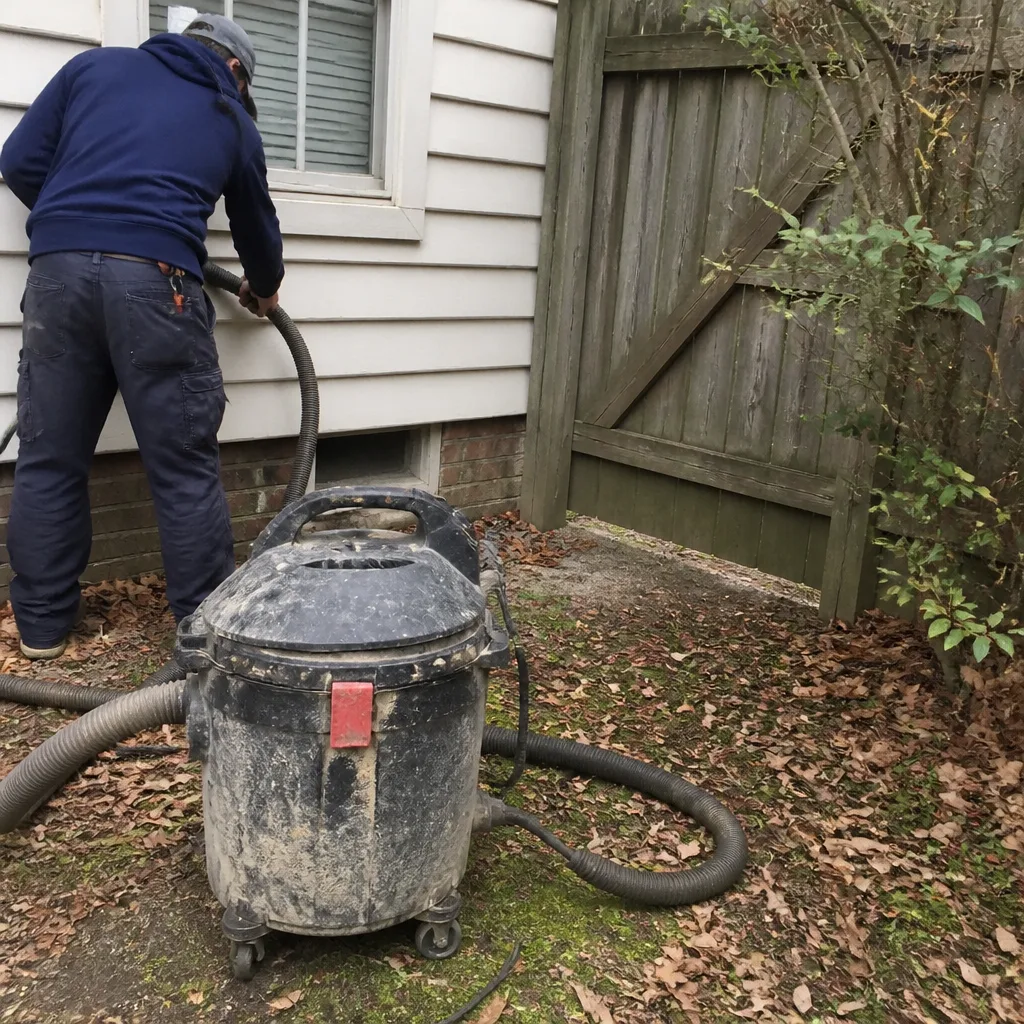 Before
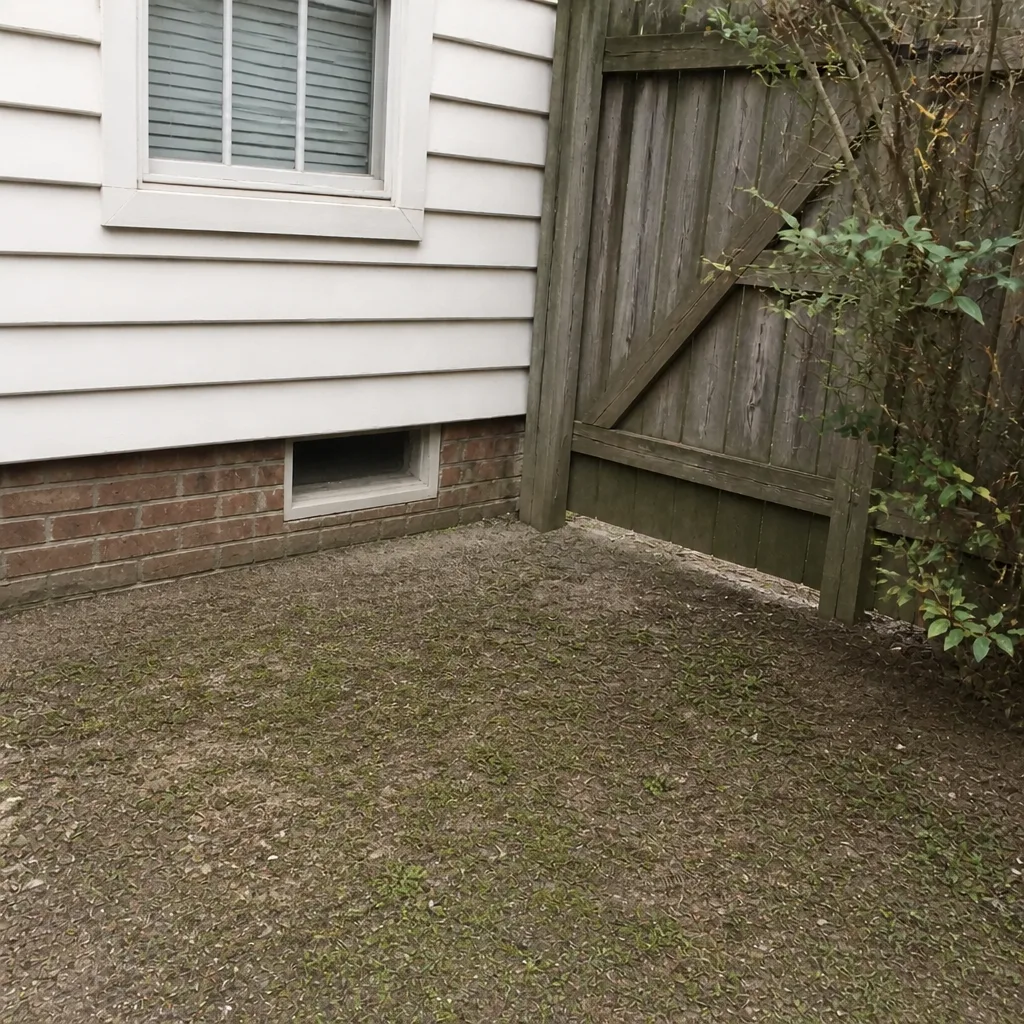 After
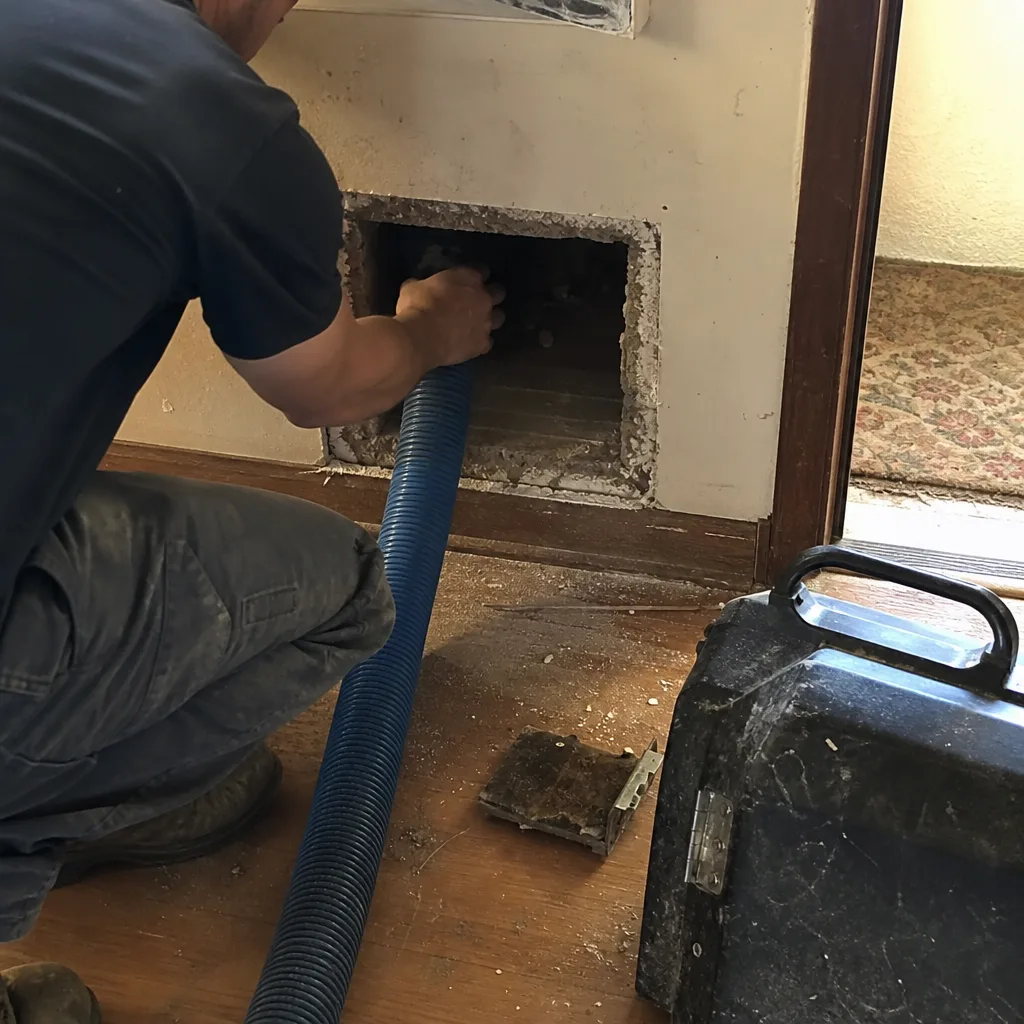 Before
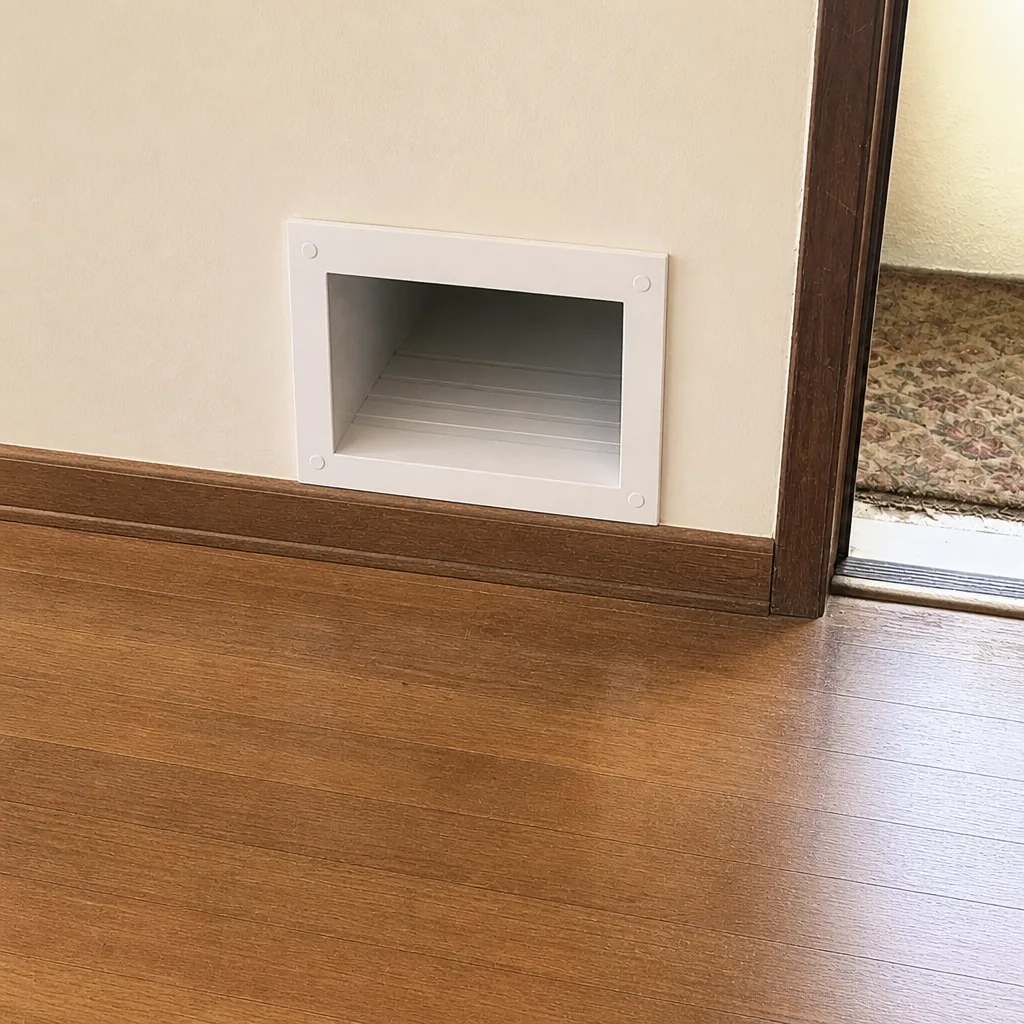 After
 Before
 After
When to Call a Professional
Some duct problems are cosmetic. Others point to a system issue that gets worse the longer it sits. Call a professional when you’re seeing visible dust streaking at the registers, when a room never heats or cools the way the rest of the house does, when there’s a musty smell that returns after cleaning, or when you can see disconnected or crushed duct in the attic or crawlspace. Call before a renovation that reroutes ductwork, and call if a past contractor made changes you can’t document. Air Duct Cleaning Sedgefield offers free estimates in Sedgefield. Call (833) 468-5694. We answer 24/7. Fast dispatch from 7am to 7pm, Sunday through Friday.
Frequently Asked Questions
No. Routine air duct cleaning is maintenance and doesn’t require a permit in Sedgefield or anywhere in Guilford County. The permit question only comes up when the job involves modifying the duct system: cutting new access openings, rerouting runs, replacing connections, or installing equipment like UV lights inside the air handler. Call (833) 468-5694 for an exact quote on your system; estimates are free.
It depends on whether the work is restoring existing joints or changing the system. Sealing existing joints with mastic or approved tape is maintenance. Cutting out and rebuilding a duct run, adding a takeoff, or replacing a collapsed section is repair work that generally requires a mechanical permit pulled by a licensed contractor. Ask any contractor to state in writing which category the job falls into; call (833) 468-5694 if you want us to walk through your system first.
A licensed mechanical contractor. A general contractor can hold the permit on a larger project, but the mechanical scope is signed off by a mechanical licensee. A duct cleaning company operating on its own isn’t that licensee, which is why duct repair often involves a second licensed party. Get the name of the contractor pulling the permit before work starts; call (833) 468-5694 and we’ll be direct about which scope is which.
Often, yes. Inspectors look for freshly cut access panels, unsupported or sagging flex runs, taped-only connections, and UV equipment wired into an air handler without a visible permit record. None of these are disasters, but they raise questions at negotiation. The fix is documentation: a written scope, photos of your own system, and permit records where required. Call (833) 468-5694 for a free estimate and we’ll help you figure out what your system actually has.
They’re held to product-approval standards for use inside an air pathway, and the mechanical code applies to alterations that change the system. There’s no separate state license for duct encapsulation the way some specialty trades are licensed. What matters to you: the product should be approved for interior duct use, it should be applied after cleaning rather than instead of it, and its name should appear in your documentation. We apply Guardsman post-cleaning, and we name it. Call (833) 468-5694 for an exact quote.
Ask for before-and-after photographs of your own system, a written scope that matches the final invoice line for line, and the product names of anything applied inside the ducts. If a repair crossed into permitted work, ask for the permit record. A contractor with a clean process will hand these over without being asked twice. Call (833) 468-5694 for a free estimate; we include photos of your ducts as part of the job.
The Bottom Line
Cleaning your ducts in Sedgefield is maintenance and doesn’t need a permit. Modifying them does. The distinction is where homeowners get caught, because the modification is often done as a favor by a crew that never mentioned the code. Protect yourself with paperwork: one flat price per system agreed before work starts, a written scope separating cleaning from repair, product names for anything applied inside the ducts, before-and-after photos of your own system, and a permit record if the job crosses into mechanical work. That packet is what answers an inspector’s question at resale. It’s also what a good contractor hands over without a fuss.
Related Pages
- air duct cleaning for the full process, from agitation to extraction.
- dryer vent cleaning for the vent run that carries lint and heat out of the house.
- HVAC cleaning for the coils, blower and cabinet side of the air pathway.
Ready to find out what your Sedgefield system actually needs? Call (833) 468-5694 for a free estimate. We answer 24/7. Fast dispatch from 7am to 7pm, Sunday through Friday. Our technicians have up to 14 years of experience, and we’ll tell you plainly what’s cleaning, what’s repair, and what needs a licensed contractor and a permit.
Written by the team at Air Duct Cleaning Sedgefield.