
Last updated November 23, 2026
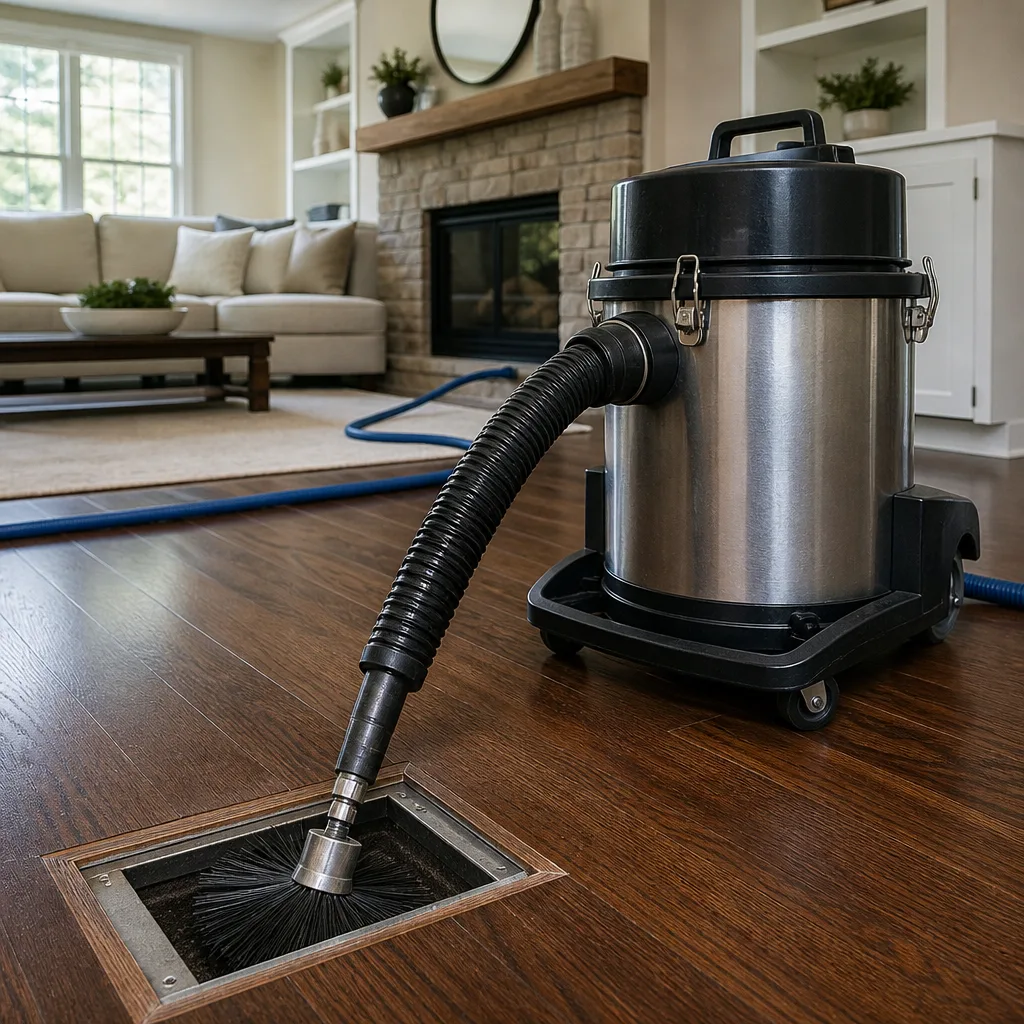 Whole-home duct cleaning
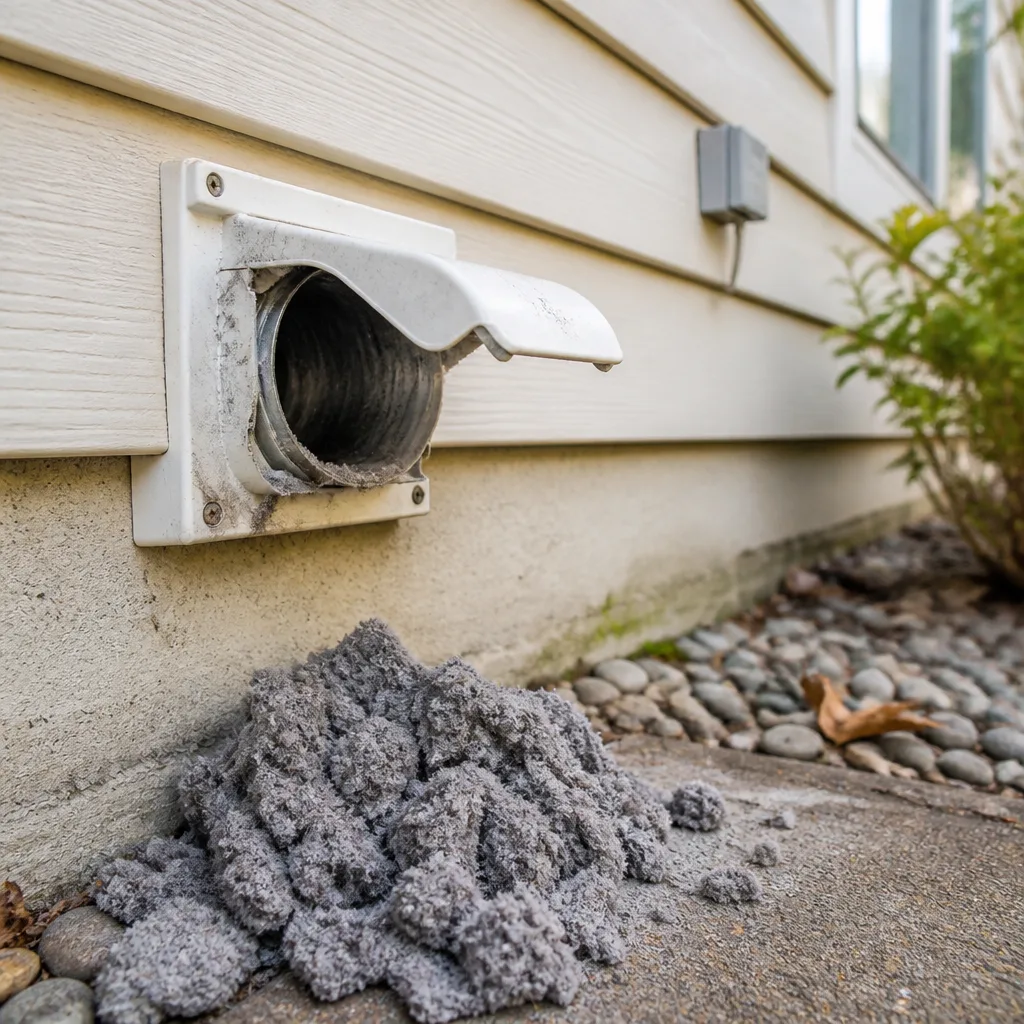 Dryer vent cleaning
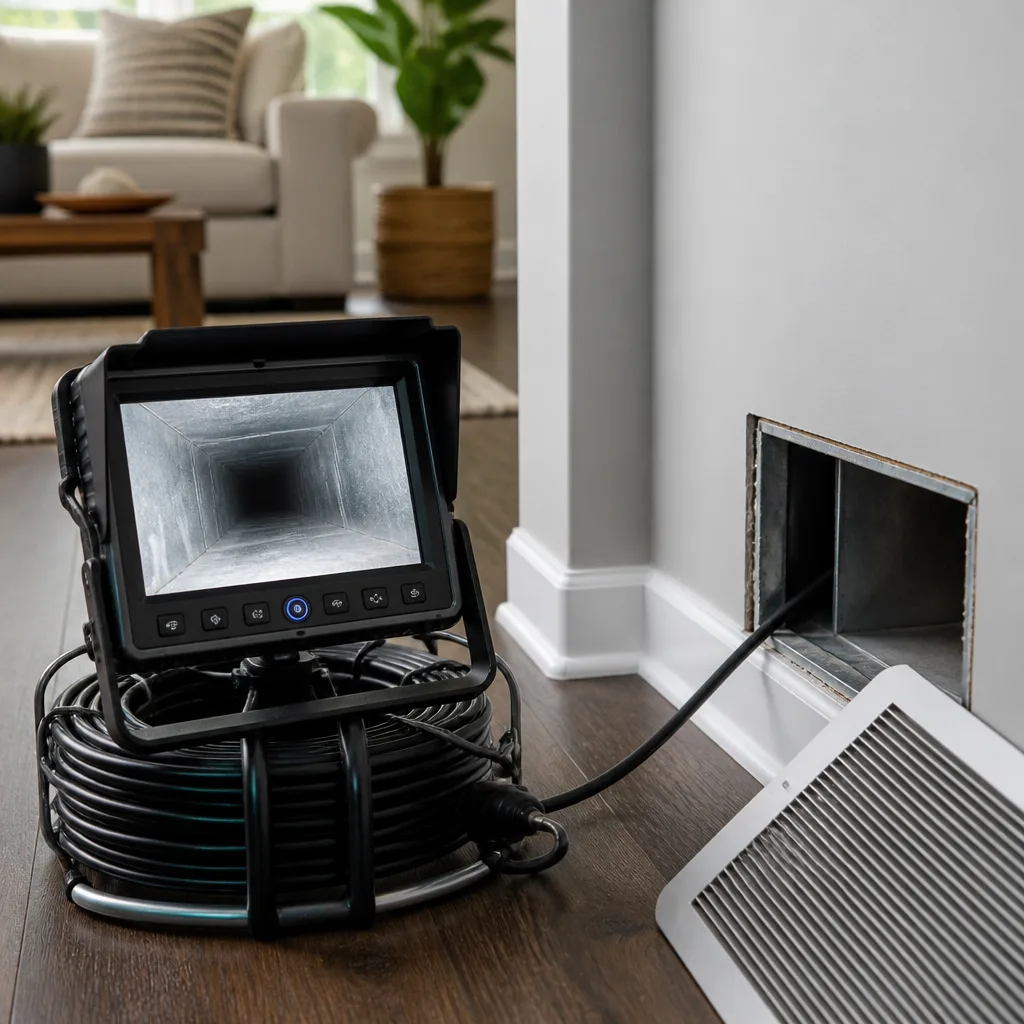 Camera inspection
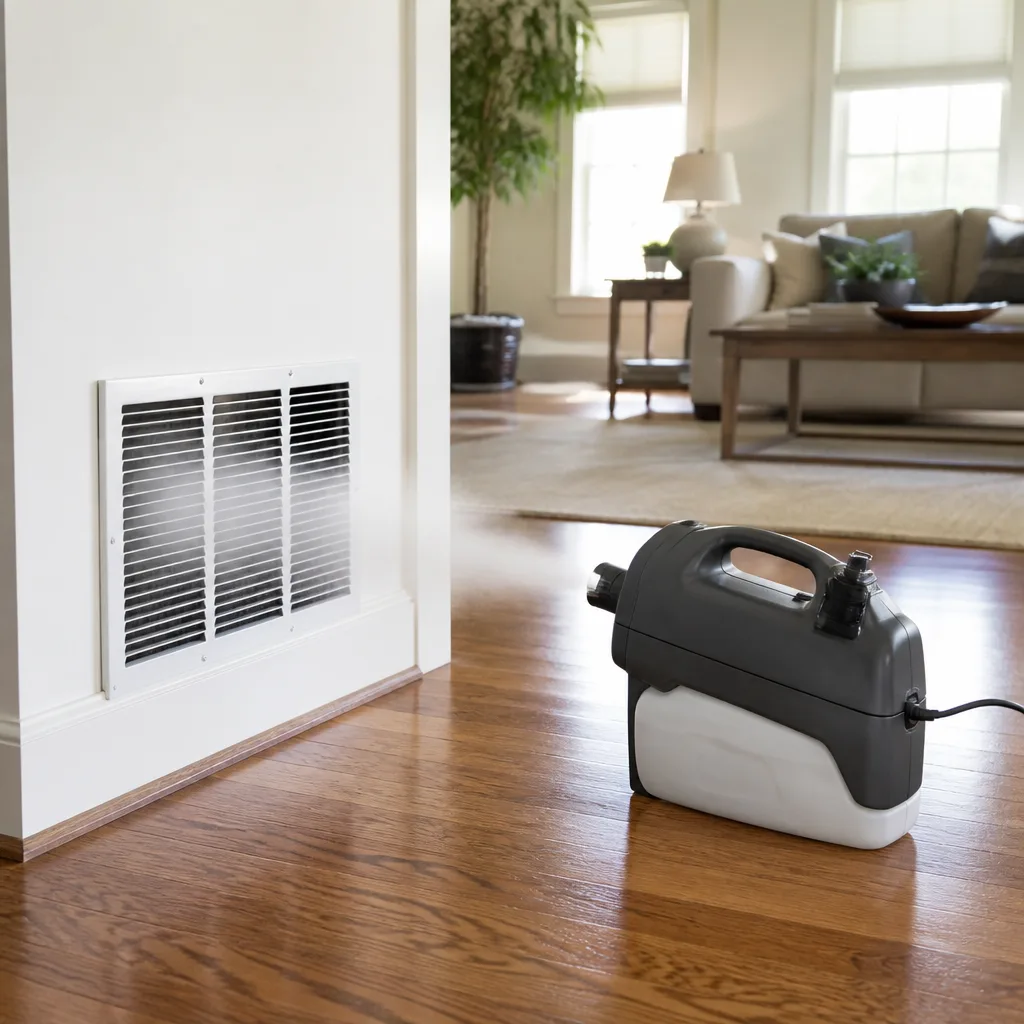 Sanitizing & deodorizing
Whole-system duct and dryer vent check with before-and-after photos - you see exactly what came out of your vents
That "$99 whole-house special" is a bait ad - the real number appears once they are in your hallway, or the "clean" is a shop-vac at the register. We photograph the inside of your ducts before and after instead.
Air Duct Cleaning Troubleshooting in Sedgefield: Common Problems and How to Fix Them
If your upstairs rooms stay 5°F warmer than downstairs after a cleaning, the job probably wasn’t the problem. A disconnected trunk line or a crushed length of flex duct is. That’s the part most Sedgefield homeowners never get told, and it’s why a second cleaning so often changes nothing. Ductwork problems fall into two very different buckets: contamination you can remove, and defects built into the system that no vacuum will ever fix. This guide maps the symptoms you’re actually noticing, weak airflow, recurring dust, musty odor, hot rooms, to the specific mechanical causes behind them, so you can walk into a conversation with a contractor already knowing what to ask.
Quick Answer
Most persistent duct complaints in Sedgefield trace back to three things: leaks and disconnected joints that pull attic or crawlspace air into the system, an air handler or plenum that was never sealed properly, and contaminated surfaces that a surface-only vacuum pass never reached. Troubleshooting works by matching each symptom to its mechanical cause, then deciding whether the fix is a better clean, a repair-and-seal job, or a change to the duct layout itself.
Styles & brands we work with
- Whole-home duct cleaning
- Dryer vent cleaning
- Camera inspection
- Sanitizing & deodorizing
Table of Contents
- Symptom-to-Cause: What Each Complaint Actually Points To
- How to Check Your Own System Balance Before You Call Anyone
- Why a Just-Cleaned System Can Briefly Smell Worse
- Cleaning Failure vs. System Design Flaw: Telling Them Apart
- What a Proper Inspection Report Should Show You
- Attic Ducts, Piedmont Heat, and Why Sedgefield Ducts Fail
- What You Can Reasonably Check Yourself (and What You Shouldn’t)
- Common Mistakes to Avoid
Symptom-to-Cause: What Each Complaint Actually Points To
Almost every duct complaint we hear in Sedgefield fits into a short list of root causes. If you can name your symptom accurately, you’re most of the way to the diagnosis. Here’s the mapping we work from.
- Dust returns within days of a cleaning. Usually a leak on the return side. The system is pulling unfiltered air from an attic, a crawlspace, or a garage-adjacent chase and distributing it through the house. Cleaning the ducts doesn’t fix a hole that keeps feeding them.
- One room never cools, others are fine. A crushed or kinked flex run, a damper stuck closed, or a branch that was never balanced. Occasionally it’s a disconnected trunk line dumping conditioned air into the attic.
- Musty smell that comes back after treatment. Moisture is still getting in. Either a condensate issue at the air handler, or humid attic air infiltrating through unsealed joints along the supply runs.
- Whistling or roaring at certain registers. Static pressure imbalance. Too little return capacity for the supply side, or a register that’s undersized for the run feeding it.
- Higher energy bills with no equipment change. Leakage. A duct system losing a meaningful share of its conditioned air to unconditioned space makes the equipment run longer for the same comfort.
- Cold floors over a crawlspace. Uninsulated or sagging duct runs, or supply boots that were never sealed to the floor penetration.
None of those six are solved by a stronger vacuum. Four of them are solved by air duct cleaning paired with repair and sealing. Two are solved by duct modification. Our air duct cleaning Sedgefield page covers the full scope of what a proper service visit includes.
How to Check Your Own System Balance Before You Call Anyone
You can get a rough read on whether your system is balanced with two things you already own: a tissue and an incense stick. This isn’t a measurement, it’s a directional check. It tells you whether you’re dealing with a supply problem, a return problem, or an airflow distribution problem, and that alone changes what the technician should look at first.
- Run the system on fan-only for five minutes so airflow stabilizes before you test anything.
- Hold a single-ply tissue against each supply register. It should pull flat and hold. If it flaps loosely, that run is starved. If it won’t hold at all, the run is likely blocked, crushed, or disconnected.
- Hold a lit incense stick near each return grille. Smoke should draw steadily into the grille. Smoke that stalls, drifts sideways, or gets pushed back at you means the return is undersized or partially blocked.
- Compare the strongest return to the weakest supply. A system that pulls hard on the return side and barely delivers on the supply side is choking. That’s static pressure imbalance, and it stresses the blower.
- Check the filter slot. A filter that’s too restrictive for the blower, or one that’s clogged, mimics a duct problem almost exactly. Rule it out first, because it’s free.
- Note which rooms fail the tissue test and write it down. That list is the single most useful thing you can hand a technician.
If more than two registers fail and the filter is clean, the problem is in the ductwork or the equipment, not the cleaning schedule. Call (833) 468-5694. We answer 24/7. Fast dispatch from 7am to 7pm, Sunday through Friday.
Why a Just-Cleaned System Can Briefly Smell Worse
A faint musty or dusty smell in the first day or two after a cleaning is common and usually harmless. What you’re smelling is disturbed dust settling out of the air, plus, if an antimicrobial product was applied, the carrier evaporating off the duct surface. It fades. A smell that gets stronger after day three, or that returns within a few weeks, means something else is going on.
The usual culprit is an air handler that wasn’t part of the cleaning. Dust and biological growth on the evaporator coil, in the drain pan, or on the blower wheel will keep seeding the airstream no matter how clean the ducts are. That’s why a service that only vacuums the duct runs and skips the air handler is an incomplete job. Our HVAC cleaning covers the equipment side of the air pathway, which is where a lot of recurring odor actually starts.
Here’s how to tell the difference:
- Normal off-gassing: faint, fades within 48 hours, no visible moisture anywhere.
- Missed growth in the air handler: smell intensifies when the system runs, persists past a week, often accompanied by a musty edge in one or two rooms closest to the unit.
- Moisture re-entry: smell is worse on humid days and after rain, which points to unsealed joints pulling in attic or crawlspace air.
If you’re in the second or third category, the ducts need another look and the fault is upstream. Call (833) 468-5694 for an estimate. It’s free, and the written estimate is what sets the price.
Cleaning Failure vs. System Design Flaw: Telling Them Apart
This is the distinction most Sedgefield homeowners never get explained, and it’s the reason people pay for a second cleaning that changes nothing. A cleaning failure means contamination was left behind. A design flaw means the system is built in a way that will keep recreating the same problem. They look similar from the register. They require completely different responses.
Ask yourself these questions:
- Did the problem come back within a few weeks? That leans design flaw. Contamination that was genuinely removed doesn’t regrow that fast without a moisture or infiltration source feeding it.
- Was the whole system in scope, including the air handler and plenum? If not, it’s an incomplete clean, not a design issue.
- Are there visible gaps at the plenum, the boots, or the trunk connections? Those are leaks, and leaks are design or installation problems.
- Did the technician seal anything after cleaning? Sealing is the step that locks in results. Without it, every joint that was leaking before is still leaking after.
If your answers point to leaks or disconnected runs, a re-clean will not help. You need repair and sealing: mastic at the joints, proper connections at the boots, and in some cases rerouting a run that was crushed during original installation. We handle dryer vent cleaning on the same visit for customers who want the whole air pathway addressed at once, since lint buildup is a separate but related airflow problem.
What a Proper Inspection Report Should Show You
Industry inspection standards exist for a reason: they give you something to hold a contractor to if the problem persists. Whether or not a contractor follows them precisely, the documentation you receive should let you verify what was actually done. If you get a one-line invoice and a verbal “all good,” you have nothing to work with later.
A useful report includes:
- Before-and-after photos of your own ducts, not stock images. Interior shots of at least the main trunk and a representative supply run.
- The air handler and plenum noted separately from the duct runs, with condition described.
- Any leaks, disconnected joints, or crushed runs flagged with location, even if they weren’t repaired on that visit.
- The treatment product named if an antimicrobial was applied, and where.
- Access points documented so a future technician can find the same cuts.
Use that report as your baseline. If symptoms return in Sedgefield, you can compare what was flagged against what’s now failing, and the conversation is about facts rather than impressions. Ask the contractor to walk you through the photos on-site. A technician who did thorough work is glad to.
Attic Ducts, Piedmont Heat, and Why Sedgefield Ducts Fail
Sedgefield sits in the North Carolina Piedmont, and the local building pattern shapes duct problems here in ways coastal or mountain towns don’t see. A large share of homes have air handlers and duct runs in the attic, which in a Piedmont summer becomes an oven. Flex duct that was run tight across joists, or that has sagged since installation, loses its interior diameter and chokes airflow. Mastic that held up in a milder climate dries and cracks. Boots at ceiling penetrations separate from the drywall, and conditioned air escapes into the attic while attic air gets pulled back in on the return side.
That pattern explains a specific complaint we hear a lot in Sedgefield: upstairs rooms that never quite cool, even with a system that’s sized correctly for the square footage. The equipment is fine. The delivery is not. Add the seasonal humidity swing, and any unsealed joint becomes a moisture pathway, which is why musty smells show up here in a way they don’t in drier climates.
What actually helps in this climate:
- Sealing every joint and boot, not just the visible ones at the trunk.
- Replacing crushed or over-stretched flex runs rather than trying to straighten them.
- Insulating runs in unconditioned space so supply air arrives at temperature.
- Containing the work area during service so attic dust doesn’t migrate through the system. We use Abatement Technologies air scrubbers for negative-pressure containment, which is standard practice in remediation and rare in routine duct cleaning.
The full payoff comes from doing the cleaning and the sealing as one job. Clean first, seal after, and the contamination doesn’t come back through the same gaps.
What You Can Reasonably Check Yourself (and What You Shouldn’t)
There’s a real line between homeowner troubleshooting and work that can put you in a crawlspace or on a ladder with a live air handler running. Crossing it isn’t worth it.
Reasonable to check yourself: the filter, the register airflow test above, visible dust streaking around boots and grilles, condensation in the drain pan, whether the outdoor unit is clear of debris, and whether you can hear rattling or whistling from specific runs.
Not reasonable to check yourself: crawling into an attic or crawlspace to inspect duct runs, opening the air handler cabinet, pulling flex duct apart to look for crushed sections, or applying mastic around an energized unit. Attic temperatures in a Sedgefield summer are genuinely dangerous, and the equipment side carries live electrical and refrigerant hazards. A trained technician has both the safety gear and the tools to see the inside of a run without dismantling it.
Write down what you find. “Two registers weak, filter changed last month, whistling at the hallway return” gives a technician a head start. That’s the value of your own check, not the repair itself.
What Equipment Actually Fixes These Problems
Not every vacuum setup is built to solve the problems above, and the tool matters more than most homeowners realize. A shop-vac style setup moves surface dust. It doesn’t agitate contaminants bonded to the duct walls, and it doesn’t capture fine particulate in a way that keeps it out of your airstream.
What we bring to a Sedgefield job:
- Rotobrush rotary-brush extraction agitates the duct interior while vacuuming, which is how bonded dust and biological material actually come loose. It’s the same equipment specified for commercial and restoration projects, and it’s meaningful over a simple wand-and-vacuum pass.
- Nikro HEPA-rated vacuum systems capture fine particulate during cleaning instead of recirculating it.
- Abatement Technologies air scrubbers hold negative pressure in the work area, so what’s disturbed stays contained.
- Guardsman antimicrobial treatment applied after cleaning inhibits mold, bacteria, and odor at the duct surface, which is what addresses recurrence in the third category above.
- Honeywell and Aprilaire products available on-site if the diagnosis points to filtration or humidity control as the root fix rather than ductwork.
Our technicians have up to 14 years of experience, and the full service, cleaning, repair, sealing, and sanitizing, happens in one appointment with the same crew. That matters, because a diagnosis made by one crew and handed to another is where most of these jobs get lost.
See the difference
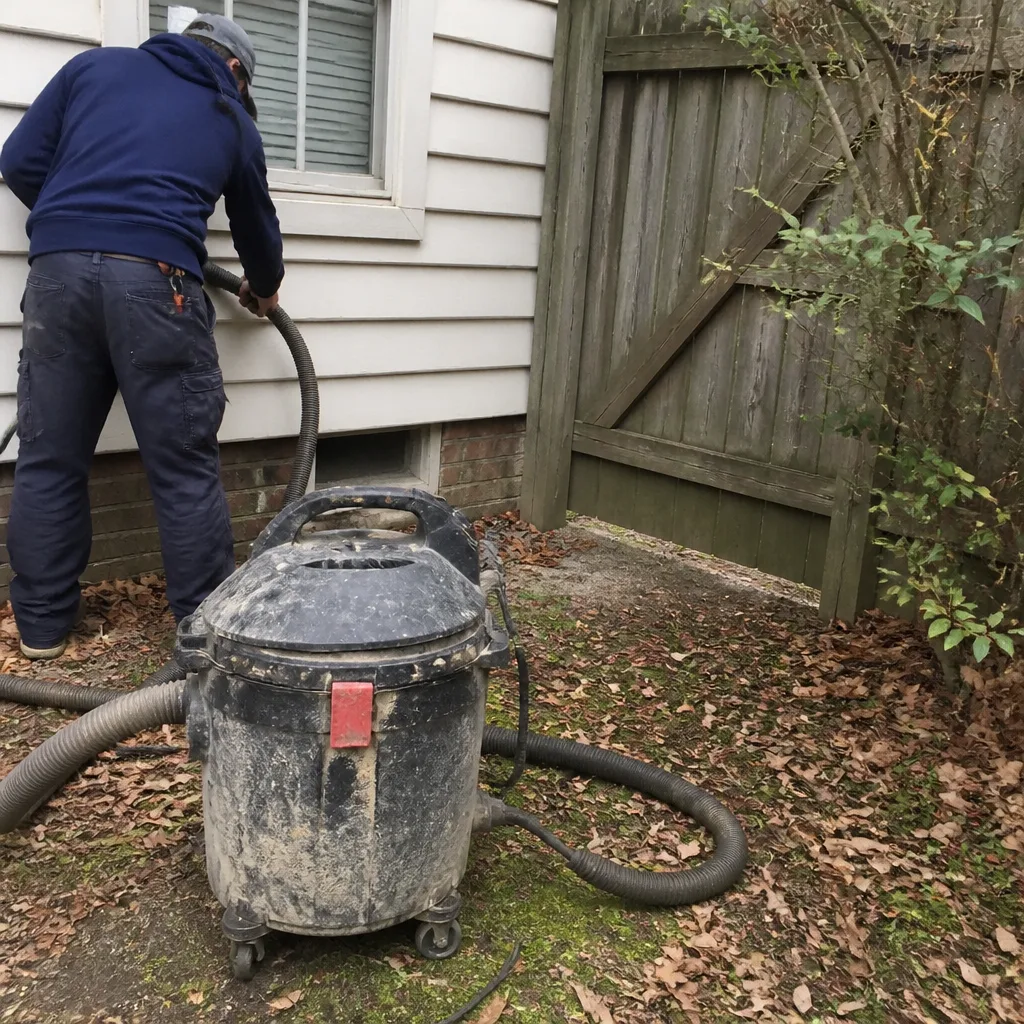 Before
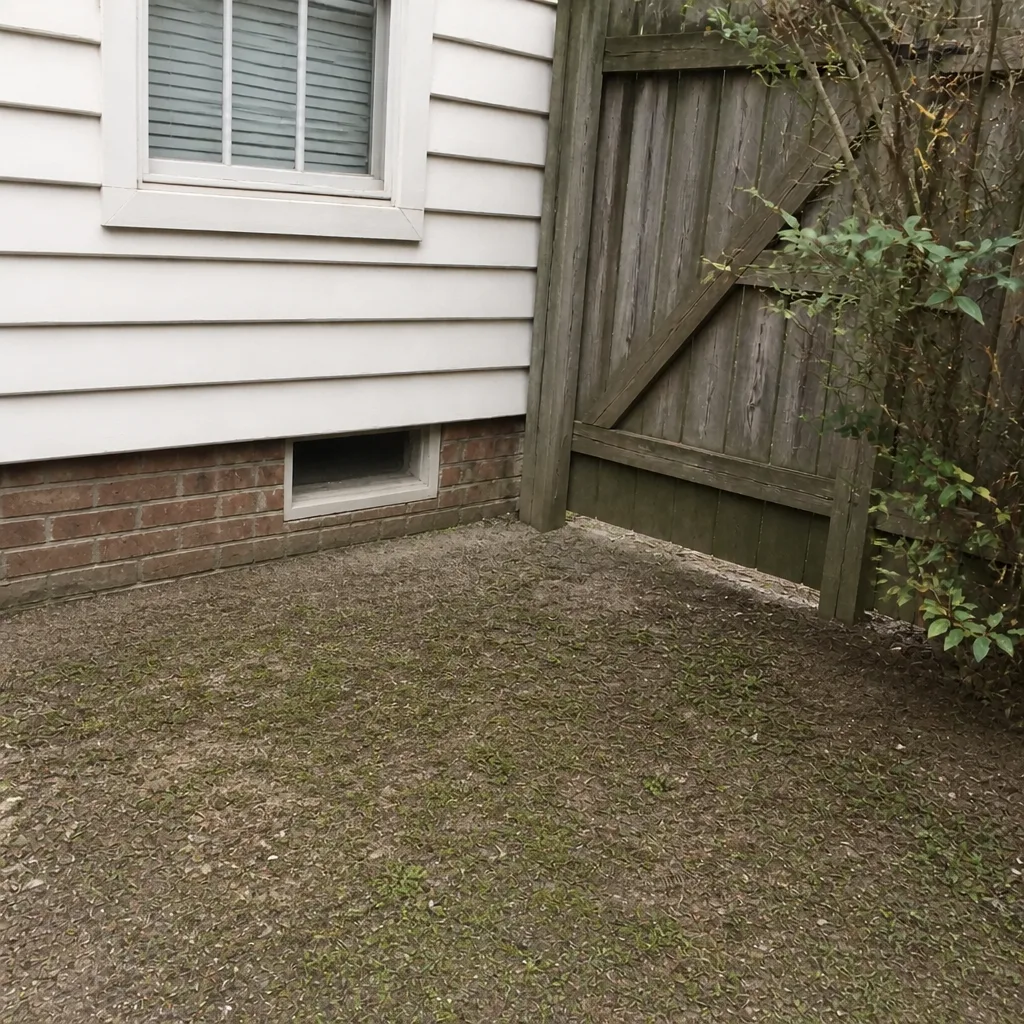 After
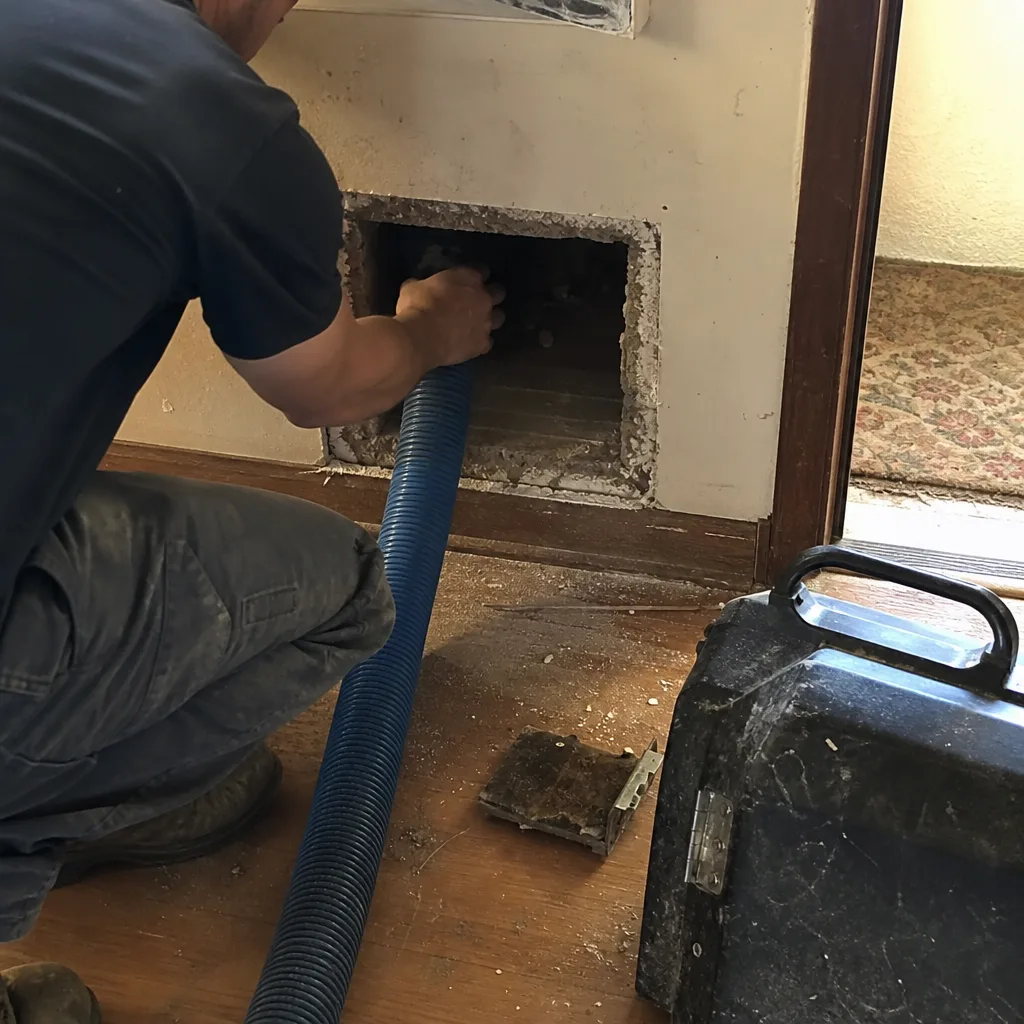 Before
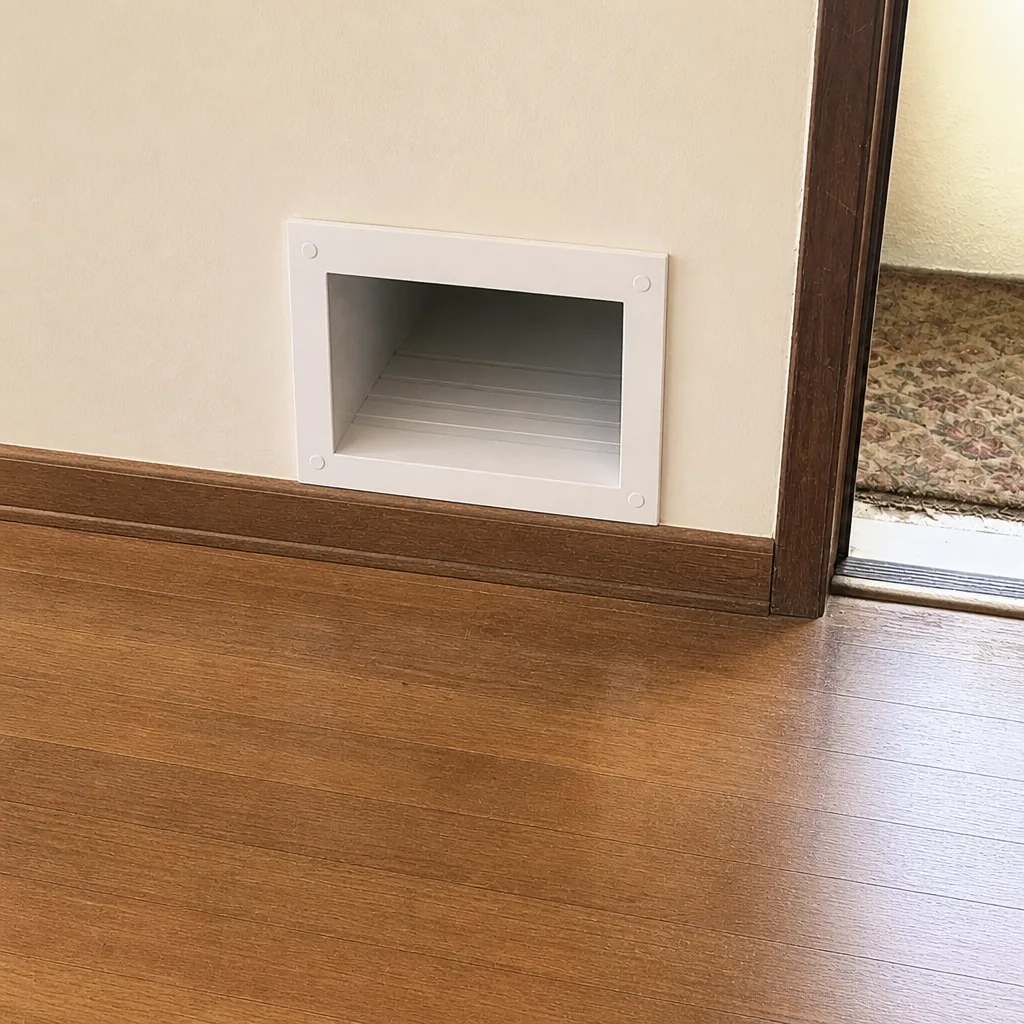 After
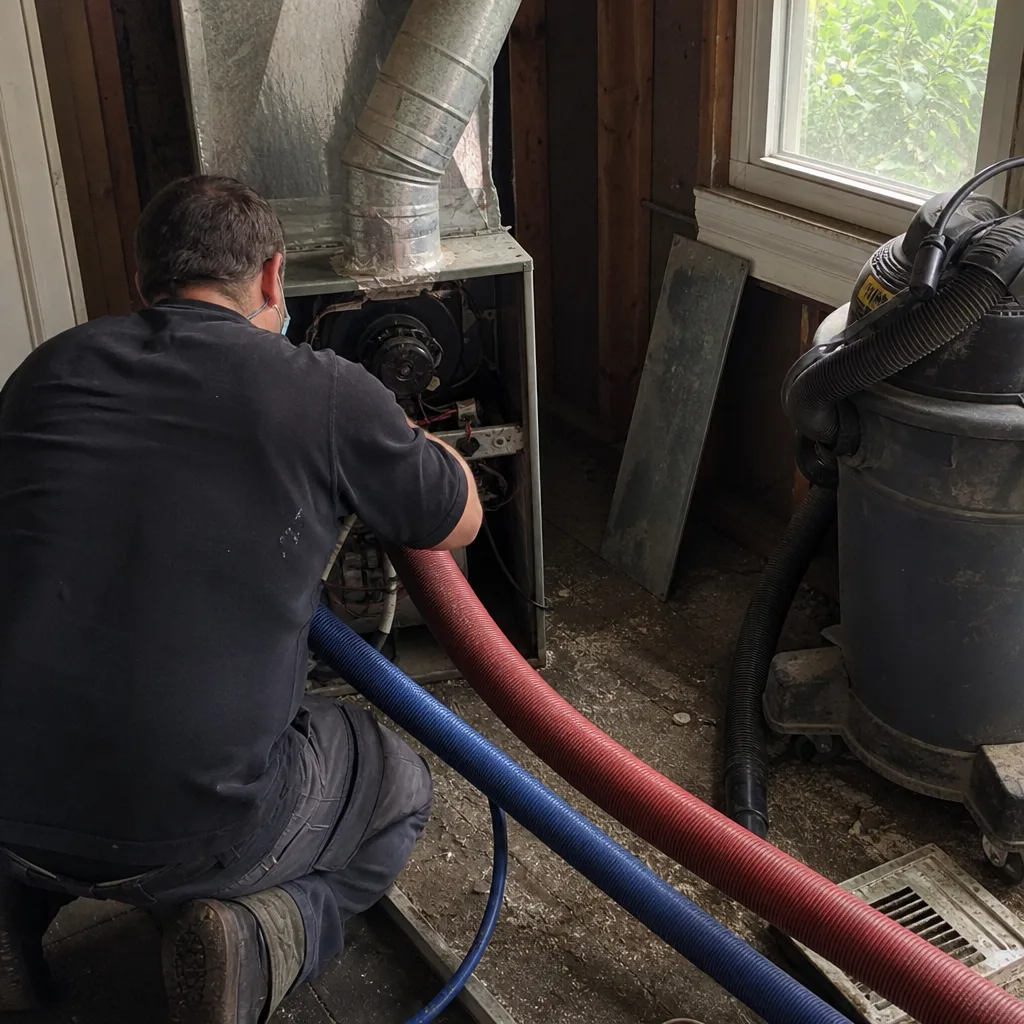 Before
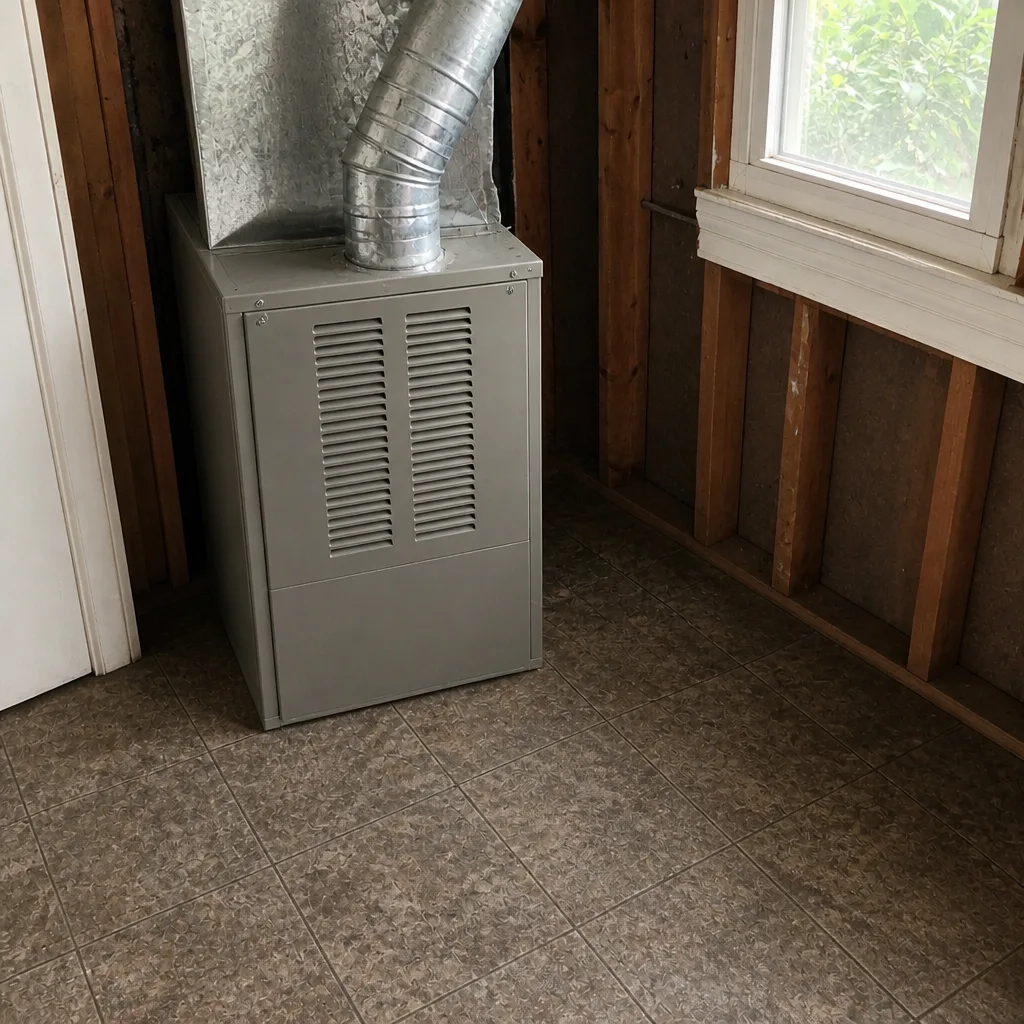 After
Common Mistakes to Avoid
- Booking a re-clean to fix a leak. If dust returned in two weeks, the duct still has an opening feeding it. Cleaning again doesn’t close the opening, and you’ll be right back where you started.
- Treating the smell without finding the moisture. Antimicrobial treatment applied over an active moisture source will fade fast. Find the source first, in the air handler or at an unsealed joint, and treat after.
- Skipping the air handler on the assumption the vents are the whole system. The coil and blower wheel are part of the air pathway. Leaving them out of the job guarantees recurring buildup.
- Accepting a quote that only lists per-vent pricing. That structure pushes the tech toward speed over thoroughness. Ask for a flat price per system, in writing, before work starts.
- Choosing the cheap quote without asking what equipment they use. Ask directly: rotary agitation or a vacuum pass alone? HEPA capture? Containment during the work? The answer tells you what kind of job you’re buying.
- Ignoring the return side. Homeowners focus on supply registers. Return leaks pull dirty air in and distribute it everywhere. In Sedgefield’s humid summers, they also pull moisture.
- Assuming energy savings without addressing leaks. A duct system leaking into an attic runs the equipment longer no matter how clean it is. Sealing is the step that translates to lower bills.
When to Call a Professional
Some of what’s above you can diagnose. Almost none of what needs fixing is DIY territory. Call a technician when the same symptom returns within a month of a cleaning, when you can see gaps at a plenum or boot, when there’s visible moisture or growth around the air handler, when one room’s airflow is clearly different from the rest and no damper adjustment helps, or when your energy bills climb without any equipment change. The same goes for any smell you can’t trace.
Air Duct Cleaning Sedgefield offers free estimates in Sedgefield. Call (833) 468-5694. We answer 24/7. Fast dispatch from 7am to 7pm, Sunday through Friday. The written estimate sets the price, and before-and-after photos of your own ducts come with the job.
Frequently Asked Questions
Dust that returns within days usually means the system is pulling unfiltered air from an attic or crawlspace through an unsealed return or joint. Cleaning removes what was there, but it doesn’t close the opening feeding it, so the fix is repair and sealing. Call (833) 468-5694 for an estimate, which is free.
Cheap quotes typically cover a surface vacuum pass only, without rotary agitation, HEPA capture, air handler cleaning, or any sealing afterward. You’re paying for a different, shorter job. That’s why the honest comparison question is what equipment and what scope, not what price. Call (833) 468-5694 and we’ll walk you through the scope before you commit.
Before-and-after photos of your own ducts and a report that documents what was found, including any leaks or disconnected runs. If a contractor can’t show you the interior condition before and after, you have no way to verify the job. Ask for it up front, and it’s standard on ours. Call (833) 468-5694 to book an estimate.
There’s no fixed interval that fits every home. A system with a clean filter and no leaks can go years without a cleaning; one with pets, recent renovation dust, or visible buildup on the registers benefits sooner. The right trigger is symptoms or visible contamination, not a calendar renewal. Call (833) 468-5694 and we’ll help you decide whether you actually need one.
Usually both, and the order matters. A crushed flex run or closed damper starves the room, and an unsealed boot at the ceiling lets what does arrive escape into the attic. Repairing and sealing the run typically resolves the room before any equipment change is considered. Call (833) 468-5694 for an on-site diagnosis.
You can, but sealing over contaminated ductwork traps the buildup inside. The sequence that holds up is cleaning first, then repair and sealing, so the sealed joints stay sealed against a clean interior. The two are one appointment with us. Call (833) 468-5694 for a free estimate.
The Bottom Line
Duct problems aren’t mysterious once you map symptom to cause. Dust returning quickly is leakage. One room that won’t cool is a crushed or disconnected run. A smell that comes back is a moisture source upstream. Weak airflow across multiple rooms is usually static pressure imbalance, and that’s a design issue, not a cleaning issue. If you’ve had a cleaning and the problem returned, the fix is repair and sealing, not another vacuum pass. And if you’re in Sedgefield, you now have a checklist to bring to the conversation. Call (833) 468-5694 for a free estimate. We answer 24/7. Fast dispatch from 7am to 7pm, Sunday through Friday.
Written by the team at Air Duct Cleaning Sedgefield.