
Last updated November 23, 2026
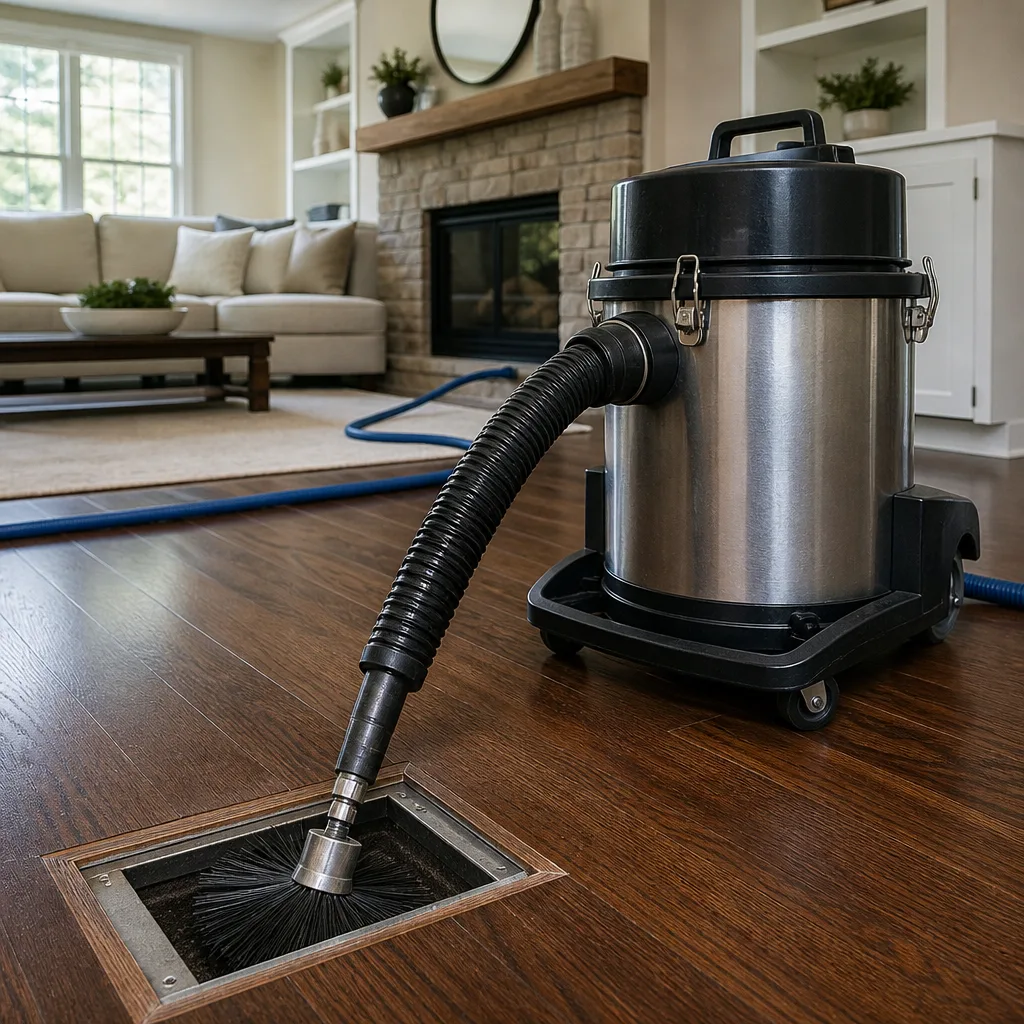 Whole-home duct cleaning
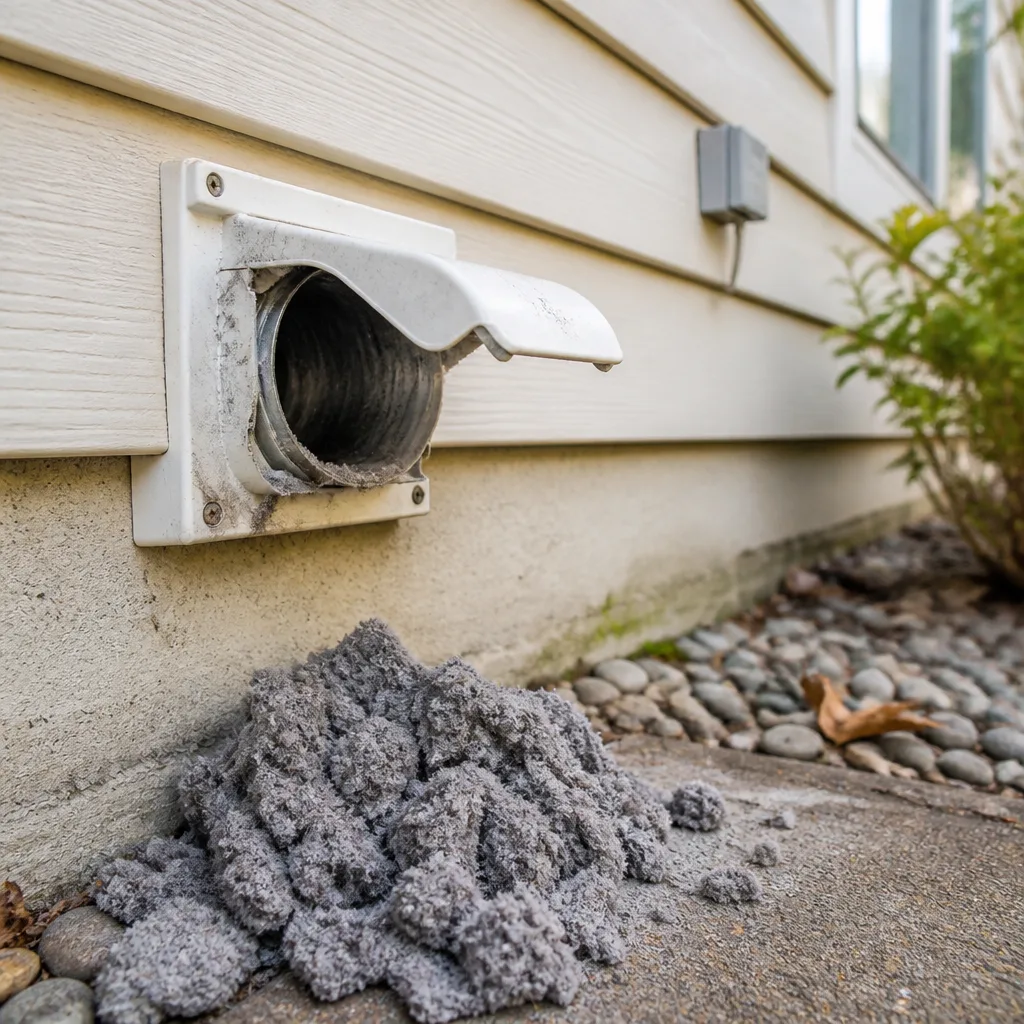 Dryer vent cleaning
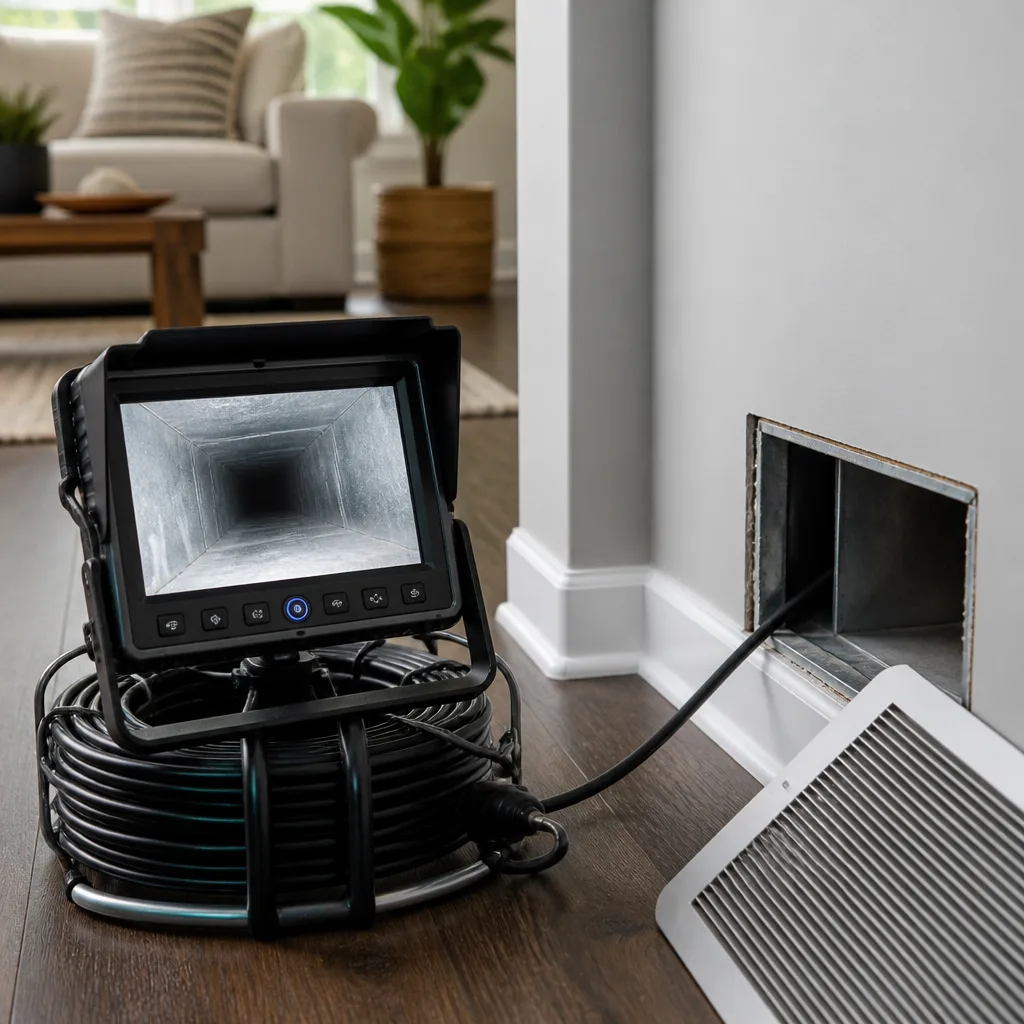 Camera inspection
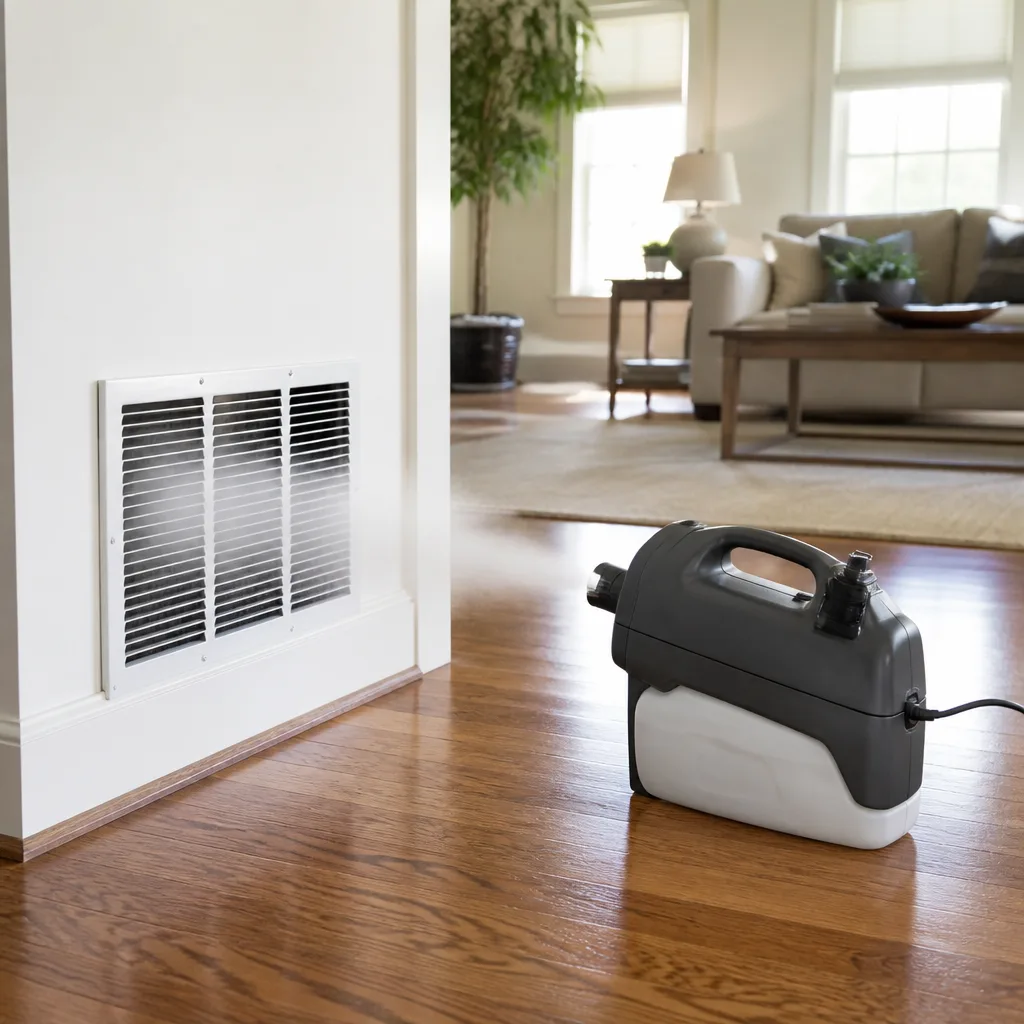 Sanitizing & deodorizing
Whole-system duct and dryer vent check with before-and-after photos - you see exactly what came out of your vents
That "$99 whole-house special" is a bait ad - the real number appears once they are in your hallway, or the "clean" is a shop-vac at the register. We photograph the inside of your ducts before and after instead.
The Complete Guide to Air Duct Cleaning in Sedgefield
Most duct cleaning jobs leave behind the dirtiest part of your system: the air handler coil and the blower wheel. Those two components sit downstream of every duct in the house, and when they stay dirty, contaminants keep getting pushed back through the supply runs no matter how thoroughly the ducts themselves were scrubbed. A vacuum pass through the visible vents cleans the least important surface in the whole air pathway. In this guide, we’ll walk through what a full-system cleaning actually involves in Sedgefield: how the components fit together, why the Piedmont’s humid summers make biofilm a real concern inside ductwork, what professional negative-pressure equipment does differently, and how to tell a sequenced job from a cosmetic one.
Quick Answer
A proper air duct cleaning in Sedgefield is a sequenced, equipment-driven process that cleans the entire air pathway, from return grilles through the supply ducts, the air handler cabinet, the evaporator coil and the blower wheel. The order matters: source removal under negative pressure comes first, then mechanical agitation, then HEPA extraction, then optional sanitizing and any duct sealing. If a quote covers only the vents and the trunk lines, it’s a partial job.
Styles & brands we work with
- Whole-home duct cleaning
- Dryer vent cleaning
- Camera inspection
- Sanitizing & deodorizing
Table of Contents
- The Full System Map: What’s Actually Inside Your Walls
- Why Sedgefield’s Humid Piedmont Climate Changes the Job
- Negative Pressure and CFM: What the Equipment Really Does
- The Step-by-Step Process a Full-System Cleaning Should Follow
- When Sanitizing Is Legitimate and When It’s an Upsell
- Duct Repair and Sealing: Locking In the Results
- How to Verify the Work Was Actually Done
- Common Mistakes to Avoid
The Full System Map: What’s Actually Inside Your Walls
Your air-handling system is not a set of tubes. It’s a loop, and everything in the loop shares the same air. Understanding the map is the first step to judging any quote you get in Sedgefield.
Start at the return grilles. Air from the living space enters these grilles, travels through return ducts back to the air handler, passes through a filter, moves across the evaporator coil, gets pulled into the blower wheel, and is then pushed out through the supply plenum into the supply ducts and out the registers. Every surface along that path touches the air your family breathes, which is why cleaning one segment and skipping the rest produces limited results.
The two components most crews skip are the coil and the blower. The coil is a finned heat exchanger. In cooling season it’s wet, and wet fins collect dust that turns into a matted layer. The blower wheel is a squirrel-cage fan whose curved blades load up with debris until they’re visibly heavy. A dirty blower wheel moves less air, which means your system runs longer to hit the same thermostat setting. Cleaning the ducts without cleaning these two parts leaves the contamination source in place.
A thorough quote for air duct cleaning should name the return side, the supply side, the air handler cabinet interior, the coil and the blower. If a proposal mentions only “vents and ducts,” ask what happens to the coil and the blower wheel. The answer tells you a lot about the job you’re buying.
Why Sedgefield’s Humid Piedmont Climate Changes the Job
Sedgefield sits in the North Carolina Piedmont, where summers are long, humid and hard on HVAC systems. That climate shapes what we find inside ductwork in ways that dry-climate cleaning guides never address.
During cooling season, the supply ducts carry air that’s been chilled and dehumidified by the coil. Duct surfaces in unconditioned spaces, such as attics and crawlspaces common in this part of the Piedmont, stay cool while the surrounding air is warm and moist. That temperature difference lets condensation form on the outside of the duct and, in poorly sealed or uninsulated runs, on the inside as well. Combine damp duct surfaces with dust and organic debris, and you have the conditions biofilm needs to grow. That’s the musty smell some homeowners in Sedgefield notice when the system first kicks on.
The practical consequences:
- Mold and biofilm risk is seasonal and structural. It’s driven by condensation, not by a one-time spill, so cleaning without addressing duct sealing and insulation often leads to regrowth.
- Flex duct is common in Piedmont homes and it sags. Low spots collect moisture and debris, and poorly supported runs can collapse under a strong vacuum if the technician isn’t careful.
- Filter discipline matters more here. A filter that’s fine in a dry climate can load up faster when the system runs long cooling cycles and pulls humid air through return leaks.
- Fall and spring pollen add to the load. The Piedmont’s tree and grass pollen seasons send fine particulate into return grilles, especially in homes with leaky return ducts.
None of this means every Sedgefield home needs aggressive treatment. It means the inspection has to look for moisture, not just dust. In our experience, a cleaning that ignores damp flex runs and leaky returns tends not to hold.
Negative Pressure and CFM: What the Equipment Really Does
Containment is the difference between removing contaminants and stirring them up. Here’s what the equipment categories actually accomplish.
Negative pressure. Before any agitation begins, the system should be put under negative pressure so that loosened debris travels toward the collection point instead of into the living space. Truck-mounted units and portable HEPA units both do this, but the setup matters more than the label. The collection point gets connected to a main trunk, registers get sealed off, and the space is checked for pressure loss.
CFM ratings. CFM stands for cubic feet per minute, the measure of how much air the vacuum moves. A higher CFM number means stronger pull at the far end of a long trunk line, which matters in larger Piedmont homes with extended runs. But raw CFM without HEPA filtration just moves dust faster; the filtration is what keeps fine particulate from exhausting back into the house. Our Nikro HEPA-rated vacuum systems are chosen for exactly that reason, and paired with Abatement Technologies air scrubbers we can hold negative-pressure containment during service, which is standard practice in remediation work and uncommon in routine duct cleaning.
Agitation. Vacuum alone pulls loose dust. The debris that’s stuck to duct walls needs mechanical action. Rotobrush rotary-brush systems use a spinning brush head on a flexible whip that travels the length of each run, loosening the adhered layer so extraction can carry it away. It’s the same class of equipment specified for commercial and restoration projects rather than the shop-vac setups some low-price quotes rely on.
If you’re comparing quotes in Sedgefield, ask what equipment will be used for agitation, what filtration class the vacuum is, and whether the crew sets up containment. The answers will separate the bids quickly.
The Step-by-Step Process a Full-System Cleaning Should Follow
Sequence is what separates a real job from a cosmetic one. This is the order a full-system cleaning should follow, and what to verify at each stage.
- Inspection and system mapping. The technician walks the system, counts registers, finds the air handler, checks flex duct condition and looks for moisture or disconnected runs. Verify: they look at the air handler, not just the visible vents.
- Containment setup. Registers are sealed, the collection connection is made, and negative pressure is established. Verify: plastic or masking at the grilles and a vacuum unit connected to the trunk.
- Source removal in the return system. Agitation plus extraction through each return run. Verify: the brush head actually travels the run, not just the opening.
- Source removal in the supply system. Same process on the supply side, working branch by branch. Verify: each register gets individual attention.
- Air handler cabinet cleaning. The interior of the cabinet is wiped and vacuumed, including the blower compartment. Verify: this step is on the written scope.
- Coil cleaning. The evaporator coil is cleaned with the appropriate method for its fin type. Verify: the technician confirms the coil was accessed.
- Blower wheel cleaning. The wheel is cleaned so the blades are clear. Verify: this is the step most often skipped, so ask directly.
- Optional sanitizing. Applied after cleaning, only if conditions warrant it (see the next section).
- Duct sealing and repair. Gaps at joints, boots and plenum connections are sealed so contamination can’t re-enter.
- Final walkthrough with photos. Before-and-after photos of your own ducts, coil and blower. Verify: you see the images before the crew leaves.
We perform the whole sequence under one appointment, from cleaning through repair, sealing and sanitizing. That’s the practical value of a full-system approach: nothing gets handed off and nothing gets deferred.
When Sanitizing Is Legitimate and When It’s an Upsell
Sanitizing is not a default part of duct cleaning. It’s a targeted treatment, and the case for it depends on what the inspection finds.
Here’s the honest split. Sanitizing makes sense when there’s visible microbial growth, a persistent musty odor that returns after cleaning, or a documented moisture problem in the ductwork. It also makes sense after a known contamination event, such as water intrusion into a duct run. In those situations, an EPA-registered fogger applied post-cleaning treats the duct surfaces, and a product like Guardsman’s antimicrobial treatment helps inhibit mold, bacteria and odor at the surface.
Where it stops being legitimate is when it’s offered to every customer as a line item before anyone has looked inside the system. Fogging clean ducts does nothing useful. Worse, fogging dirty ducts seals contamination under a treated layer instead of removing it. Sanitizing comes after source removal, never instead of it.
The product category matters too. Foggers are a surface treatment applied after cleaning. Encapsulants are coatings that seal a duct lining, and they belong to specific repair situations, not routine cleaning. If a quote lists “encapsulation” as standard, ask why. On a healthy system, cleaning plus sealing is the right combination; a coating over a duct that didn’t need one is money spent on nothing.
If a company in Sedgefield recommends sanitizing, the recommendation should point to something they found: a moisture reading, a visible growth pattern, an odor source. A general suggestion without a specific reason is a sales script.
Duct Repair and Sealing: Locking In the Results
Cleaning removes contamination. Sealing keeps it from coming back. This is the step most duct cleaners skip entirely, and in Sedgefield’s climate it may be the most important one.
Leaky ducts do two harmful things. They pull unconditioned attic or crawlspace air into the system, which brings in dust, insulation fibers and humidity. And they push conditioned air into spaces where it does no good, which raises energy use. In a humid Piedmont summer, that second effect compounds: every leak in the return side pulls moist outside air toward the coil, making it work harder to dehumidify.
After cleaning, a technician should inspect joints, boot connections, plenum seams and any flex duct runs for gaps, disconnected sections and crushed or sagging spans. Repair work can include reconnecting and properly supporting flex runs, sealing seams with mastic or approved tape, and addressing the plenum where the air handler meets the ductwork. Sealing a cleaned system locks in the results and lowers the energy waste that leaks cause.
This is where HVAC cleaning and duct work overlap. The air handler cabinet, coil and blower are part of the same system as the ducts, and leaks near the cabinet undo cleaning up and downstream. A team that handles both under one scope avoids the finger-pointing that happens when one contractor cleans and another repairs.
How to Verify the Work Was Actually Done
You shouldn’t have to take anyone’s word for it. There are concrete ways to confirm a cleaning happened as described.
- Ask for before-and-after photos of your own system. Not stock images. Photos of your return trunks, your coil and your blower wheel, taken during the job.
- Watch the containment setup. If registers aren’t sealed and no vacuum unit is connected, you’ll see it. Containment is visible from the hallway.
- Check the coil and blower yourself afterward. Ask the technician to show you the air handler before and after. A clean blower wheel looks different from a loaded one.
- Ask what was found, not just what was cleaned. A real report mentions specific conditions: a disconnected flex run, a damp low spot, a gap at the plenum.
- Confirm the scope in writing before work starts. The scope should list each component. One flat price per system, agreed before the work begins, is how it should be priced, not a per-vent figure that grows as the job goes on.
This industry has a reputation problem built on bait-and-switch pricing: a low teaser that turns into a much larger invoice once the technician is on site. The answer is a written scope and a flat price per system. If a quote in Sedgefield seems unusually cheap, ask what’s excluded. The missing steps are usually the expensive ones.
How Much Does Air Duct Cleaning Cost in Sedgefield?
Pricing in the Sedgefield market depends on system size, the number of runs, accessibility of the air handler, and whether sealing or sanitizing is included. Because the estimate is written per job, the written estimate sets the final price. What you should expect from any reputable quote is a whole-system range, not a per-vent price.
Two patterns are worth knowing before you compare bids:
- Whole-system pricing reflects scope. A quote that covers returns, supplies, the air handler cabinet, coil and blower costs more than one that covers vents and trunks only, because it’s a larger job.
- Cheap quotes are cheap because steps are missing. No containment, no coil cleaning, no blower cleaning and no sealing are the usual shortcuts.
- Sealing is priced separately when it’s needed. Repair scope varies with how many runs have gaps or need support.
- Sanitizing should be condition-based, not default. If it’s on every quote before inspection, question it.
Call (833) 468-5694 for a free estimate. We’ll walk the system, put the scope in writing, and give you one flat price per system before any work begins.
Dryer Vents Are Part of the Same Air Story
Duct cleaning and dryer vent cleaning are separate jobs, but they belong in the same conversation about air movement and safety in a Sedgefield home.
A dryer vent clogged with lint restricts airflow, which raises drying times and heat buildup inside the vent. That’s a fire concern, not a comfort one. The same rotary-brush and HEPA extraction equipment used on ductwork handles dryer vents well, and it’s worth having the vent inspected whenever the ducts are cleaned, since both feed off the same household routines that generate lint and dust. If it’s been a while since the vent was checked, dryer vent cleaning is a straightforward addition to the appointment. Both jobs are part of the five services we perform under one scope.
See the difference
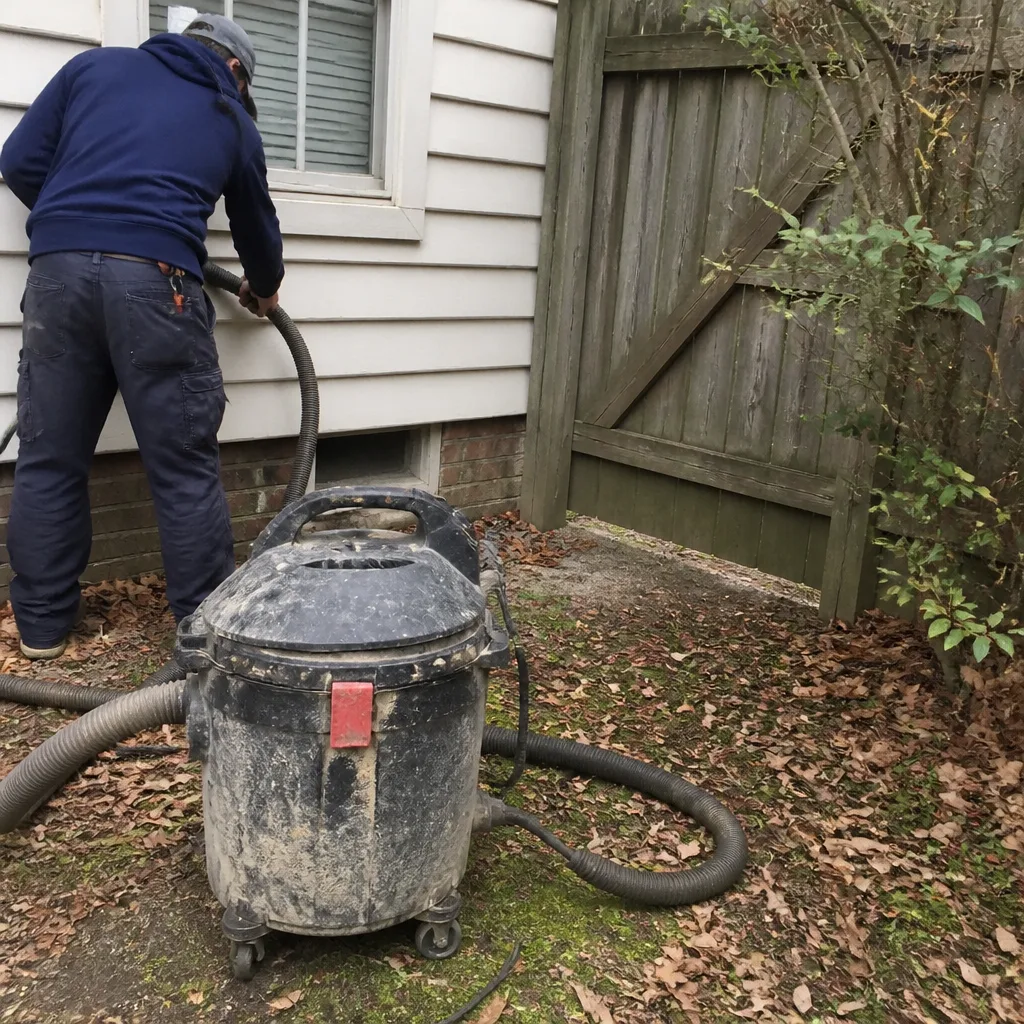 Before
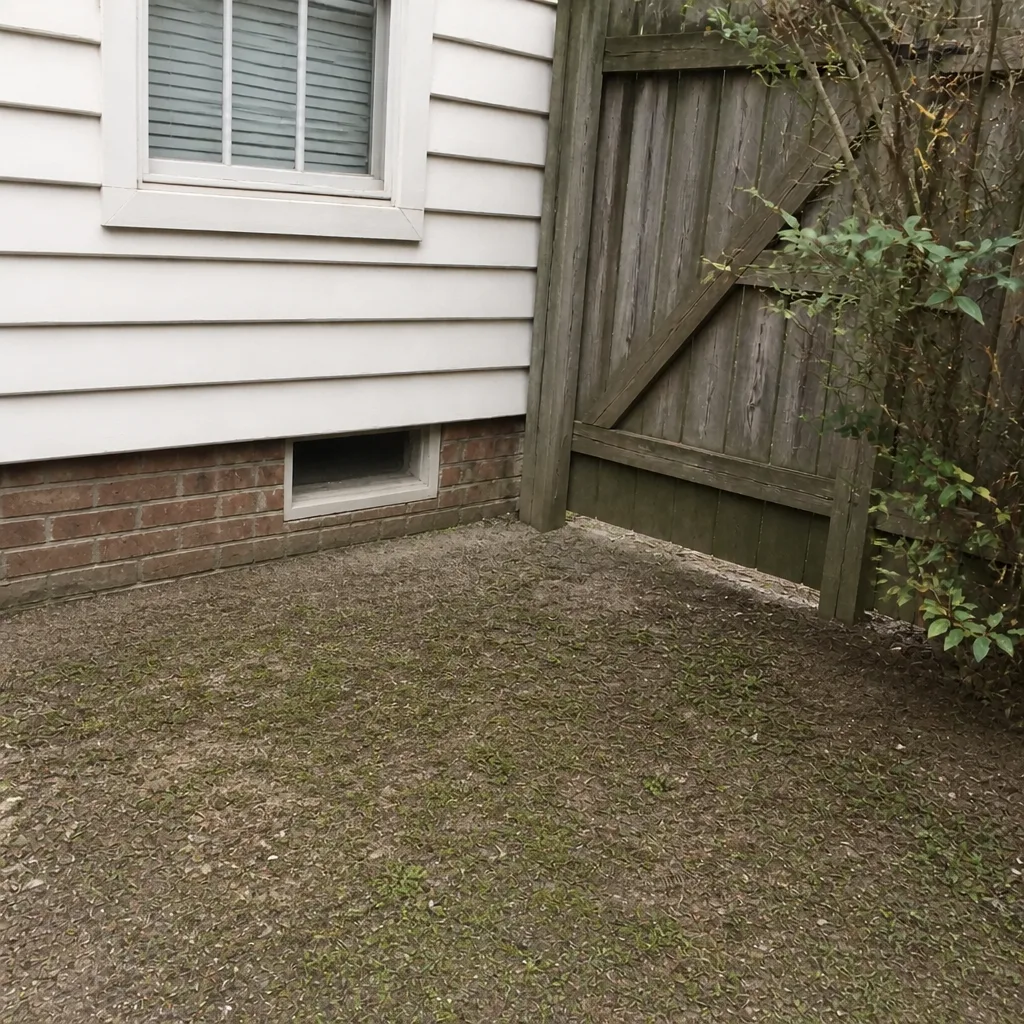 After
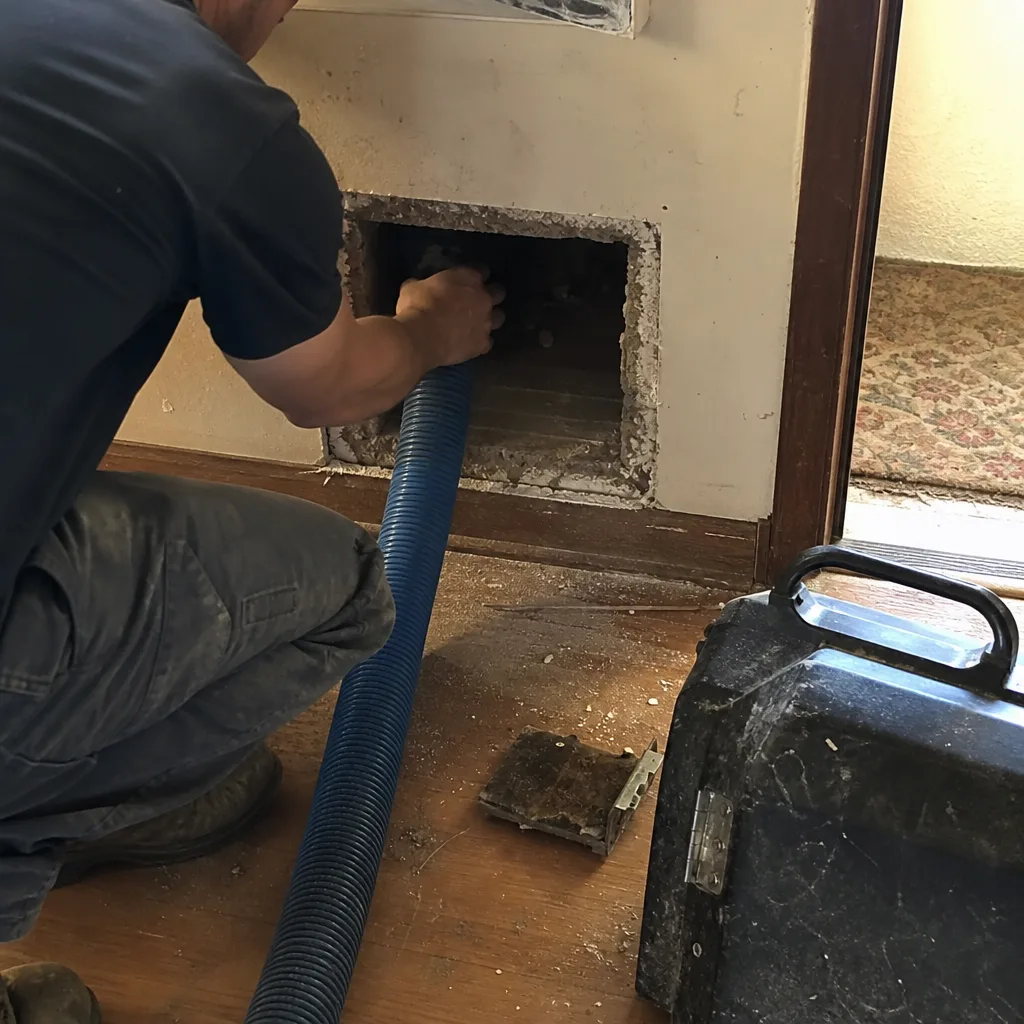 Before
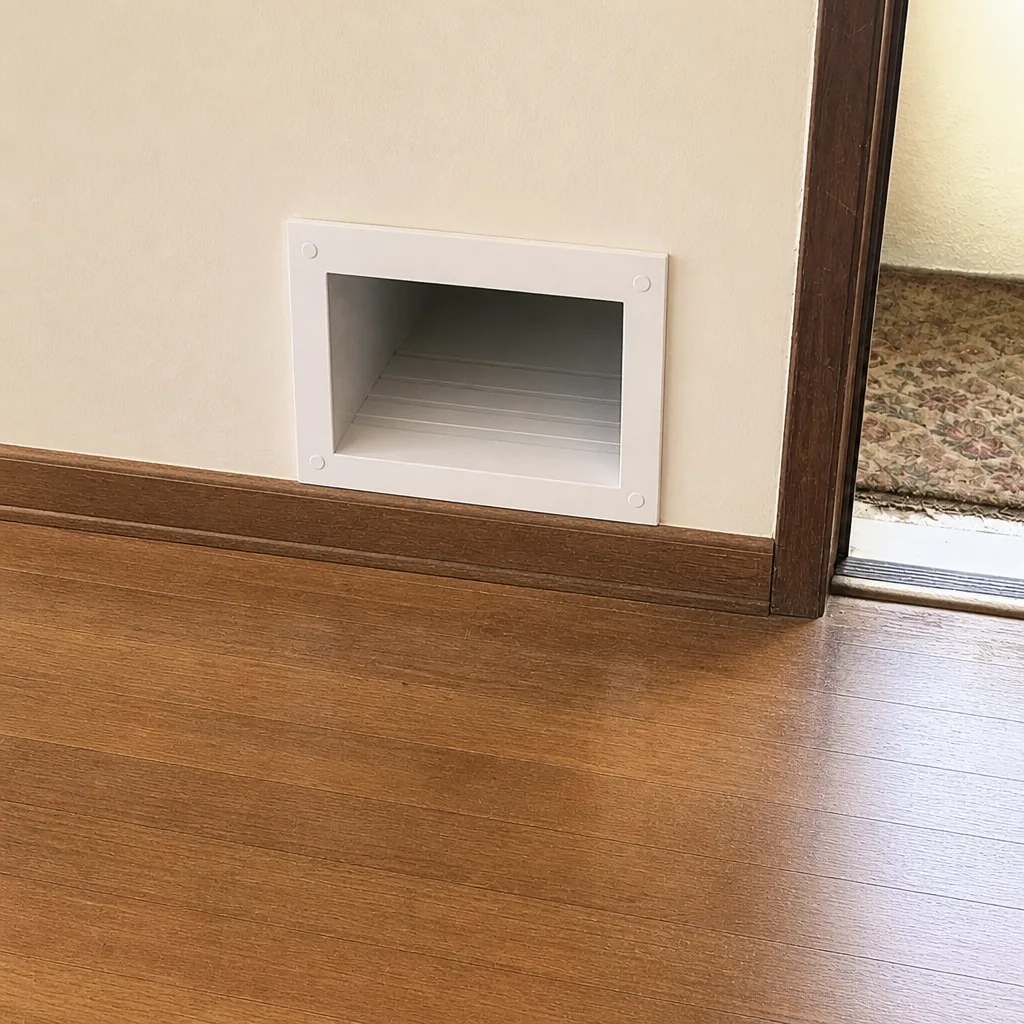 After
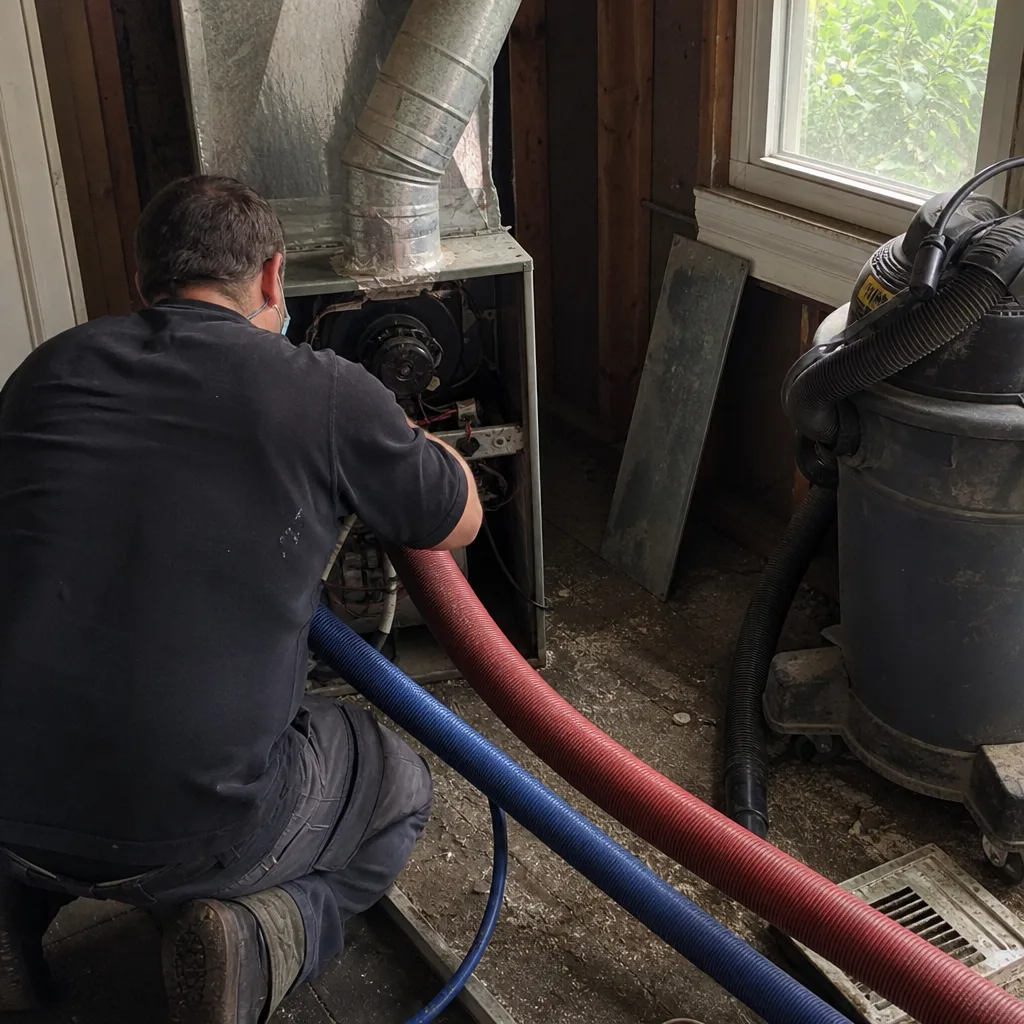 Before
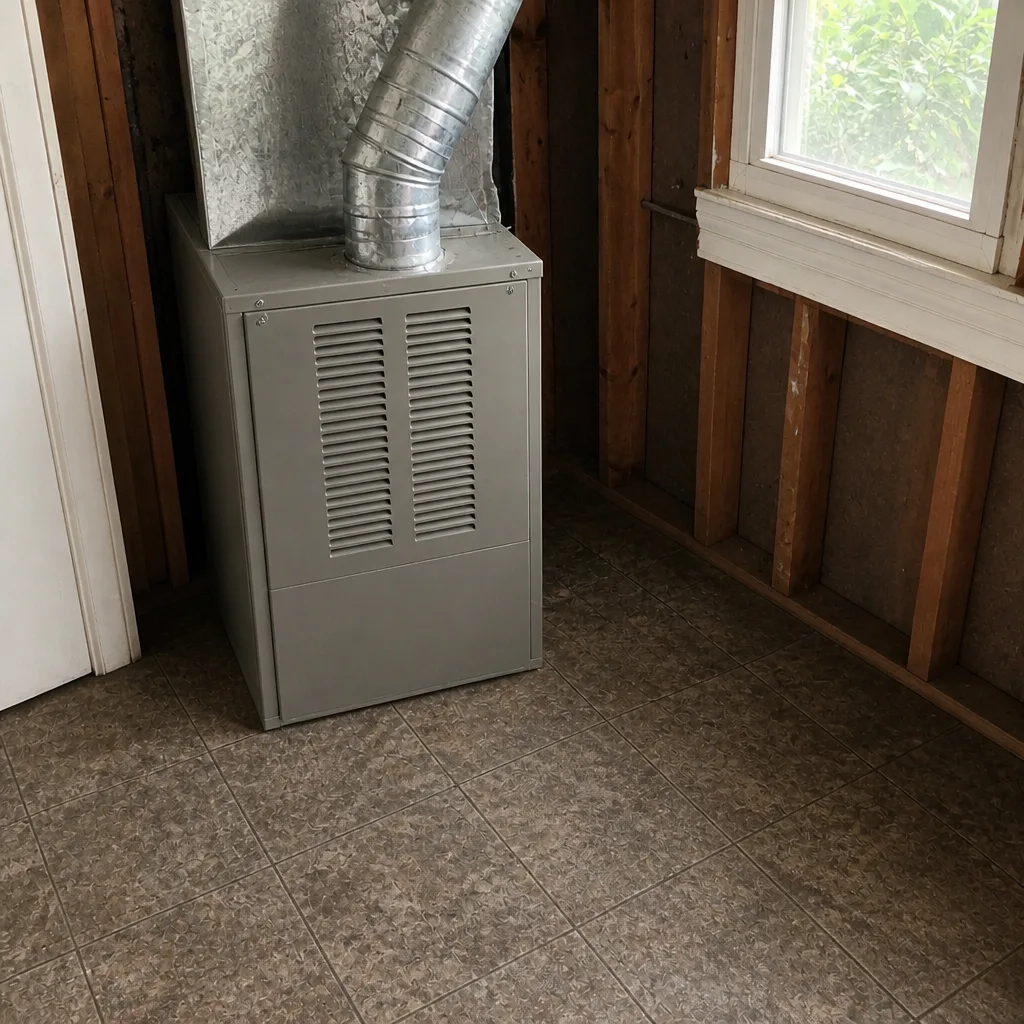 After
Scheduling and What to Expect on the Day
A full-system cleaning takes most of a day in a typical Sedgefield home, depending on the number of runs and how much repair is needed. Here’s what the day looks like.
- Arrival and setup. The technician walks the system with you, confirms the scope and begins containment.
- Cleaning. Returns, supplies, air handler cabinet, coil and blower, in sequence, under negative pressure.
- Treatment and repair. Sanitizing if conditions warrant it, then sealing and any duct repair.
- Walkthrough. You review the before-and-after photos and the written findings before the crew leaves.
We dispatch crews Sunday through Friday, 7am to 7pm, and we’re closed Saturday. If you’re planning around a work schedule, a Sunday appointment is available. Call (833) 468-5694. We answer 24/7. Fast dispatch from 7am to 7pm, Sunday through Friday.
Common Mistakes to Avoid
- Buying a per-vent price. Per-vent pricing rewards speed over coverage and leaves the trunk lines and air handler untouched. Insist on a whole-system scope and one flat price per system.
- Skipping the coil and blower. These are the two components that contaminate everything downstream. A quote that doesn’t name them is a partial cleaning.
- Ignoring damp flex runs. In the Piedmont’s humid summers, a sagging flex duct that collects condensation will regrow biofilm after cleaning. It needs to be re-supported or replaced, not just vacuumed.
- Accepting sanitizing without a reason. If no one found visible growth, odor or moisture, fogging is an upsell. Ask what was found before agreeing to treatment.
- Skipping duct sealing. Cleaning without sealing lets leakage pull Piedmont humidity and attic dust right back in. The results won’t hold through the next cooling season.
- Not asking for photos. Before-and-after photos of your own ducts and air handler are the simplest proof the work happened. Any crew should be able to provide them.
- Hiring on price alone. A low bid that skips containment, extraction filtration and the air handler isn’t a discount. It’s a smaller job.
When to Call a Professional
Some signs point clearly to professional service. Persistent dust on surfaces shortly after cleaning the house. A musty odor that appears when the system starts, especially in summer. Visible debris around return grilles or inside supply registers. Allergy symptoms that ease when you’re away from home. A recent renovation that sent drywall dust through the returns. A blower wheel or coil you’ve never had inspected. If any of these sound familiar, a professional inspection will tell you what’s actually in the system before you spend anything on cleaning.
Air Duct Cleaning Sedgefield offers free estimates in Sedgefield. Call (833) 468-5694. We answer 24/7. Fast dispatch from 7am to 7pm, Sunday through Friday. One flat price per system, before-and-after photos of your own ducts, and a scope in writing before work starts.
Frequently Asked Questions
Whole-system cleaning in the Sedgefield market is priced per job, not per vent, so the exact figure depends on system size, the number of runs and whether sealing or sanitizing is included. The written estimate sets the final price, and we agree to one flat price per system before work begins. Call (833) 468-5694 for an exact quote; estimates are free.
For most homes, every three to five years is a reasonable interval, but the Piedmont’s humid summers can shorten that in homes with leaky returns, pets or recent renovation dust. A system that was properly sealed after cleaning holds its results longer than one that wasn’t. Call (833) 468-5694 and we’ll look at your specific system before recommending a schedule; estimates are free.
Cheap quotes are usually smaller jobs: no containment setup, no HEPA filtration, no coil or blower cleaning and no sealing. The price gap reflects missing steps, not a better deal. Ask any contractor what’s excluded. Call (833) 468-5694 for a written scope that names every component; estimates are free.
Ask for before-and-after photos of your own ducts, coil and blower wheel, taken during the job. Containment setup is also visible: sealed registers and a connected vacuum unit should be obvious in the house. We walk you through the photos and findings before the crew leaves. Call (833) 468-5694 to book an estimate; estimates are free.
Yes. The Piedmont’s long humid summers create condensation on cool duct surfaces, especially in attics and crawlspaces, and that moisture combined with dust is what allows biofilm to grow. This is why sealing and proper flex duct support matter as much as cleaning. Call (833) 468-5694 to have your system inspected for moisture; estimates are free.
Both. Dryer vent cleaning is one of our five core services, along with air duct cleaning, HVAC cleaning, duct repair and sealing, and air quality and sanitizing. One appointment can address the whole system. Call (833) 468-5694 to schedule; estimates are free.
The Bottom Line
Air duct cleaning in Sedgefield works when it’s treated as a sequenced, full-system process instead of a single vacuum pass. The order is what matters: inspection, containment, source removal in the returns and supplies, air handler cabinet, coil and blower cleaning, then condition-based sanitizing and duct sealing. The Piedmont’s humid climate makes sealing and moisture inspection especially important, because cleaning without fixing a damp flex run or a leaky return won’t hold. Ask for a written scope, a flat price per system and before-and-after photos of your own ducts. Those three things separate a real job from a cosmetic one, in Sedgefield and anywhere else. For the full picture of what we cover, start with Air Duct Cleaning Sedgefield.
Call (833) 468-5694 for a free estimate. We answer 24/7. Fast dispatch from 7am to 7pm, Sunday through Friday.
Written by the team at Air Duct Cleaning Sedgefield.