
Last updated November 23, 2026
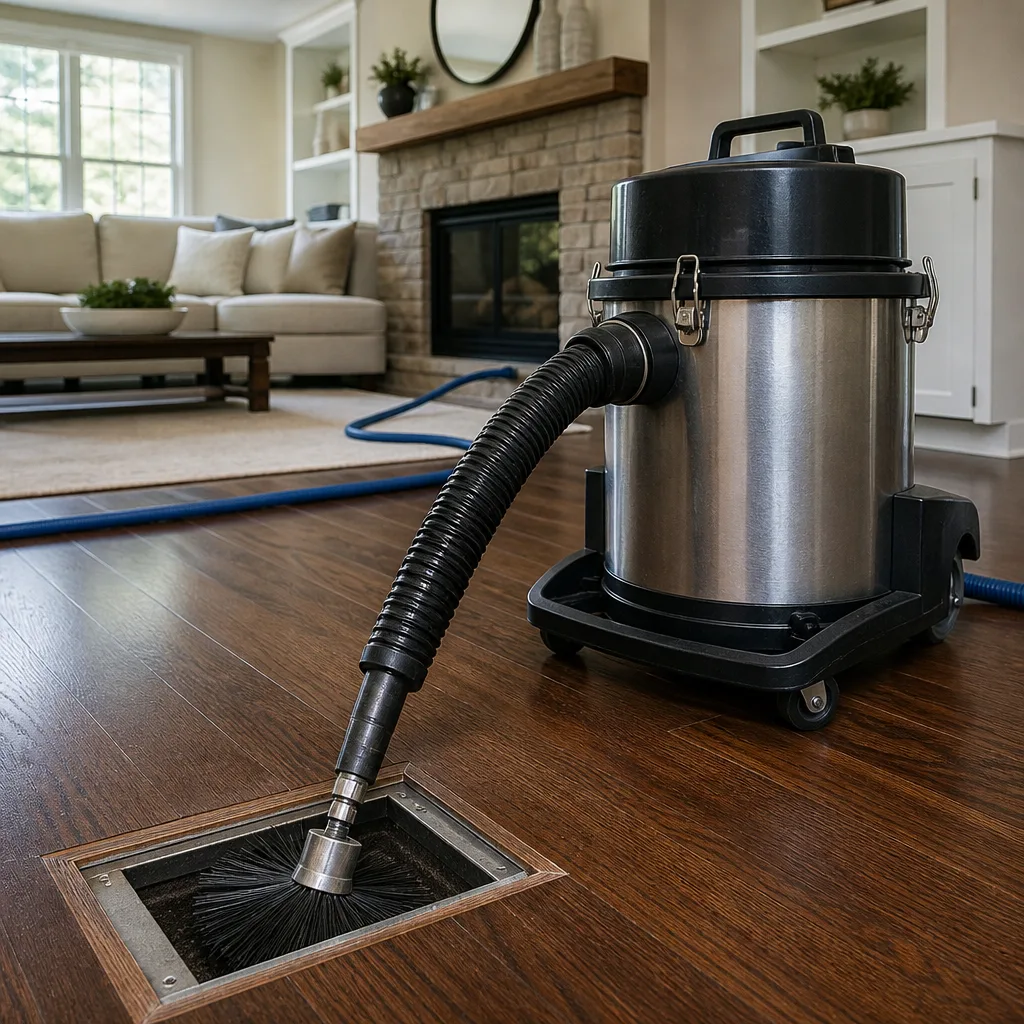 Whole-home duct cleaning
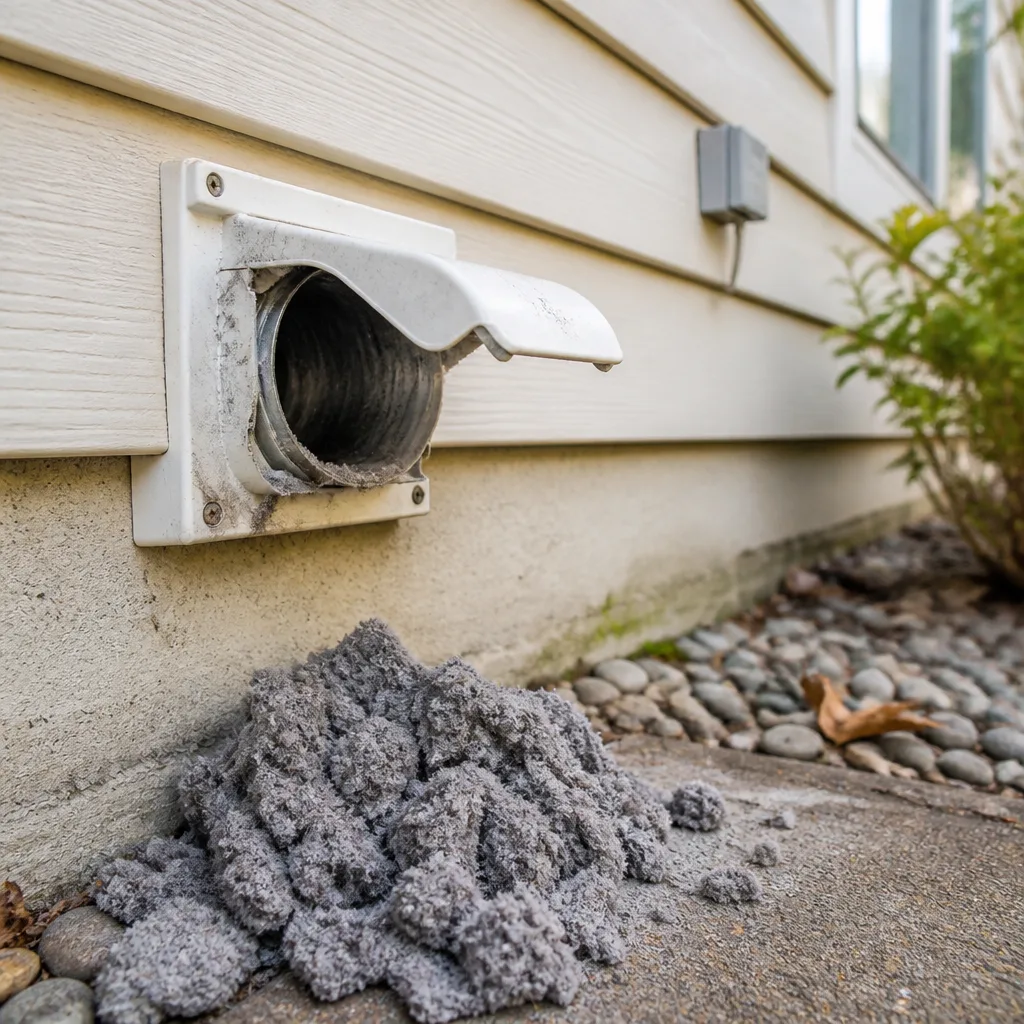 Dryer vent cleaning
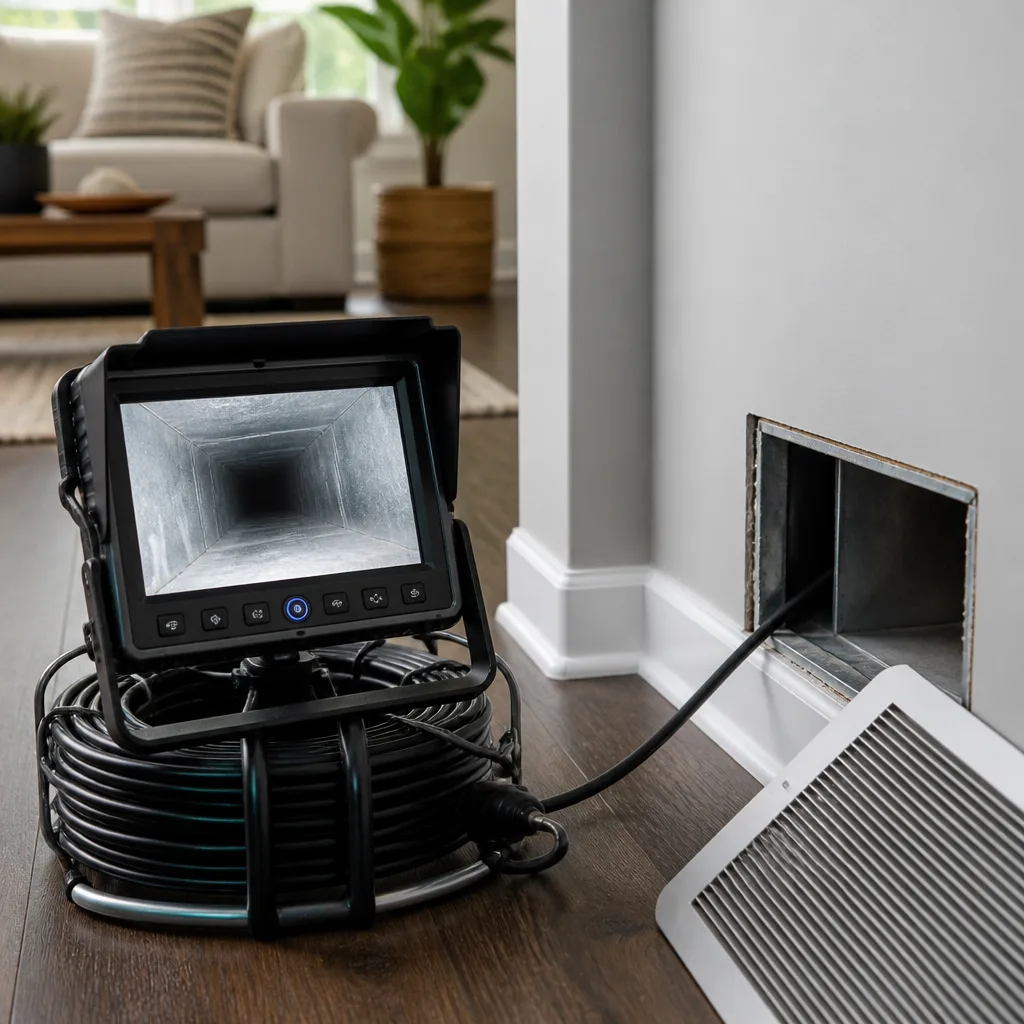 Camera inspection
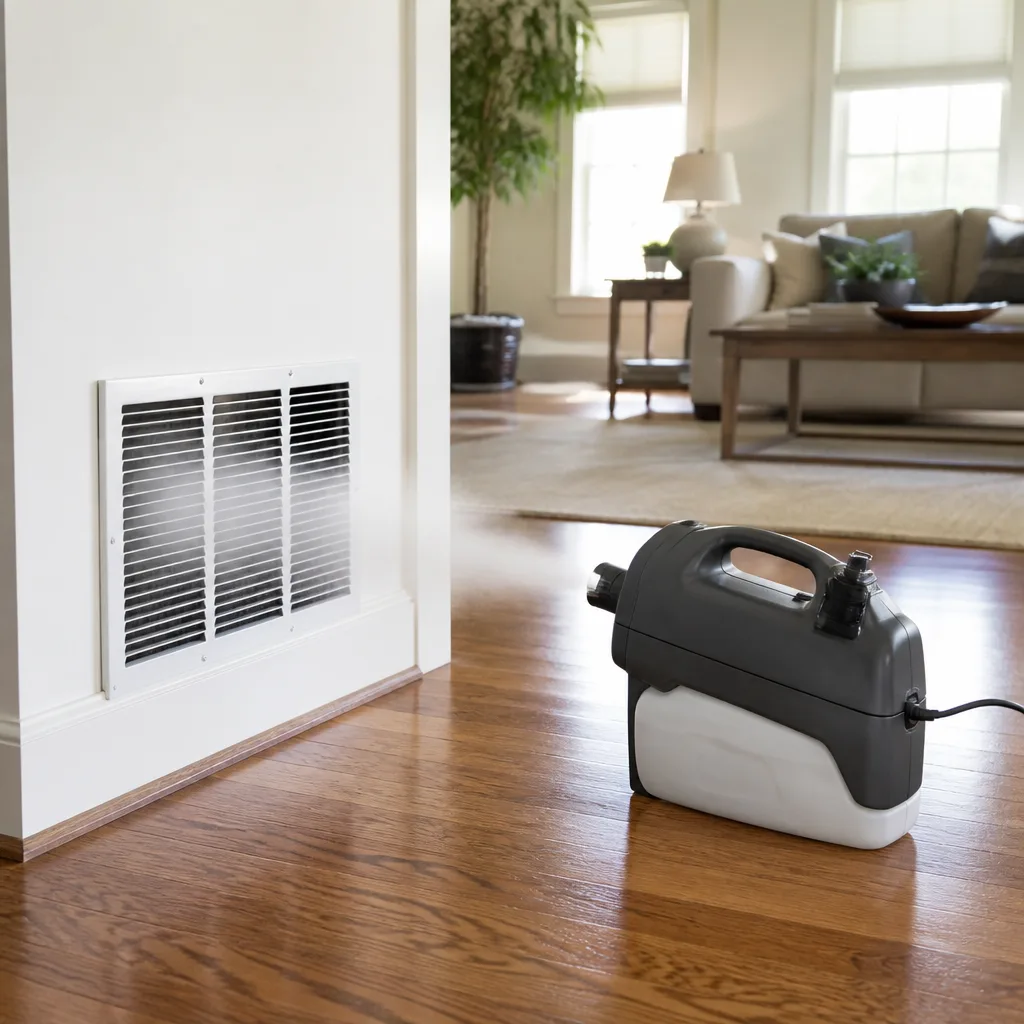 Sanitizing & deodorizing
Whole-system duct and dryer vent check with before-and-after photos - you see exactly what came out of your vents
That "$99 whole-house special" is a bait ad - the real number appears once they are in your hallway, or the "clean" is a shop-vac at the register. We photograph the inside of your ducts before and after instead.
Air Duct Cleaning Maintenance Schedule: What to Do and When
Most homeowners hold one number in their head: clean the ducts every three to five years. It’s the answer that shows up everywhere, and it quietly ignores how a house in Sedgefield actually works. A single-story home here with two dogs, a vented crawl space, and a heat pump that runs ten months out of the year has almost nothing in common with that national average. The right schedule isn’t a calendar rule at all. It’s a set of decisions tied to your square footage, your foundation type, your pets, your allergies, and how hard your system runs. This guide walks through each variable, gives you a home-profile matrix to set your own interval, and lays out the tasks you can handle between professional cleanings so your system stays ahead of the dust instead of behind it.
Quick Answer
There’s no single correct interval for air duct cleaning. A typical Sedgefield home with one pet and a slab foundation can usually go three to five years between cleanings, while a crawl-space home with multiple pets, allergy sufferers, and year-round HVAC use often needs service every two to three years. The right schedule depends on your home’s specific load, not a national average.
Styles & brands we work with
- Whole-home duct cleaning
- Dryer vent cleaning
- Camera inspection
- Sanitizing & deodorizing
Table of Contents
- Why the 3-to-5-Year Rule Doesn’t Fit Sedgefield Homes
- The Home-Profile Matrix: Setting Your Cleaning Interval
- Crawl Space Construction and Duct Contamination
- Month-by-Month Maintenance You Can Do Yourself
- When to Add Sanitizing vs. a Standard Mechanical Clean
- The Parallel Schedule: Dryer Vent Cleaning
- Tracking Performance Indicators Between Cleanings
- What a Full-System Cleaning Includes
Why the 3-to-5-Year Rule Doesn’t Fit Sedgefield Homes
The “every three to five years” recommendation is a useful starting point, but it was built around an average that doesn’t exist. It assumes a mild climate, a moderate run time, no pets, and a house that breathes a certain way. Sedgefield homes break several of those assumptions at once.
Start with run time. Our summers are long and humid, and our winters bring enough cold to keep the heat cycling. A heat pump in this part of North Carolina can run close to ten months out of the year. Every hour the system runs, air moves through the ducts, and every cubic foot of moving air carries dust, pollen, and pet dander that settles on duct walls. A house that runs its system ten months accumulates surface loading faster than one in a milder climate that runs six or seven.
Then add humidity. Summer moisture in the Piedmont sits high enough that any cool surface in the air pathway can collect condensation. Duct interiors that stay damp become a hospitable place for biological growth, which is why our approach leans on moisture readings before it leans on the calendar. We’re not recommending cleaning more often for its own sake; we’re recommending it when the conditions that drive contamination actually line up.
Construction matters just as much. A lot of Sedgefield housing stock was built with vented crawl spaces, and a crawl space is a direct path for ground moisture and soil dust to reach the ducts above it. Slab homes don’t have that pathway to the same degree. Same town, same general climate, very different contamination loads.
What all this means for you: treat the three-to-five-year number as the floor, not the answer. The next section gives you a way to adjust it for your actual house.
The Home-Profile Matrix: Setting Your Cleaning Interval
Rather than guess, work through the five factors below and count your adjustments. This is the same reasoning we use when we look at a home. The result is a starting interval you can revisit as conditions change.
The five variables that move your interval
- Square footage. Larger homes have more ductwork and more surface area for dust to settle. A system serving 2,800 square feet holds considerably more contamination than one serving 1,400 square feet, even at the same age.
- Construction type. Vented crawl space homes in Sedgefield need more frequent attention than slab-on-grade homes, because that subfloor void is an active moisture and dust pathway.
- Pet count. One dog or cat adds a steady stream of dander and hair to the return air. Two or more pets, especially double-coated breeds, meaningfully shorten the interval.
- Occupant allergies. If anyone in the home deals with asthma or seasonal allergies, a shorter interval and a higher standard of filtration matter more than for a household with no sensitivities.
- HVAC run hours. A system running ten months a year moves more air, and more contaminants, than one running five or six.
Building your starting interval
- Start at four years for a mid-size home with a slab foundation, no pets, no allergy concerns, and average run time.
- Subtract six months if you have a vented crawl space.
- Subtract six months per pet beyond the first.
- Subtract six months if allergies or asthma are part of the picture, or if you’re running a heat pump close to year-round.
- Floor out at two years. Below that, the more useful move is fixing the source (sealing leaks, upgrading filtration) rather than cleaning more often.
A crawl-space home in Sedgefield with two dogs and a family member with seasonal allergies lands on the two-to-three-year end, while a slab home with no pets can go four to five. Write your number down and use the tracking section later to refine it.
Crawl Space Construction and Duct Contamination
If your home sits on a vented crawl space, this is the factor that most often catches Sedgefield homeowners off guard. Flex duct running through a damp, unconditioned subfloor void has a lot working against it.
The subfloor is where the return air and much of the supply trunkwork live. When a crawl space draws in outdoor humidity through its vents, that moisture lands on duct surfaces that are colder than the surrounding air. Condensation collects. Soil dust and insulation fibers settle where the ducts meet the floor. And any gap in a flex duct connection, a collar, or a boot becomes an open door for that contamination to enter the airstream.
This is why we treat duct repair and sealing as part of the schedule rather than a separate line item to think about later. Cleaning a crawl-space system without sealing its leaks is a temporary fix; the same gaps that let dust in during cleaning let it right back in afterward. During a full-system visit we agitate the duct walls with a Rotobrush rotary-brush head and extract the loosened material with a Nikro HEPA-rated vacuum, so contaminants come out rather than get pushed around the house. Then we seal the leaks we find.
What you can check yourself: look at any accessible flex duct in the crawl space for crush damage, sagging, disconnection, or visible gaps at the boot. Crushed flex duct reduces airflow and gathers dust at the pinch point. Loose connections pull crawl-space air directly into your living space. If you see either, add sealing to the schedule sooner rather than later. Duct sealing after cleaning locks in the results and lowers the energy waste that leaks cause.
Month-by-Month Maintenance You Can Do Yourself
Professional cleaning resets the system, but what happens between visits determines how quickly it gets dirty again. These tasks are safe and simple for a homeowner. They’re built around the Sedgefield seasons.
Filter swaps
The single highest-leverage habit. In summer and winter, when the system runs hardest, check the filter monthly and replace it when it’s visibly loaded. In the shoulder months when the system cycles less, you can stretch to every two to three months. A cheap filter changed often tends to outperform an expensive filter left too long, though a well-matched filter upgrade makes a real difference over a full year.
Register vacuuming
Pull the floor and wall registers occasionally and vacuum what you can reach with a brush attachment. This keeps the visible openings from shedding dust back into the room and gives you a look at what’s moving in the duct near each opening. Registers are where most homeowners first notice a problem, so treating them as a viewing port is worth the few minutes.
Visual inspection of accessible flex duct connections
If you have a crawl space or attic access and it’s safe to peek in, look at the flex duct runs for sagging, crushing, or disconnected collars. Don’t crawl into tight spaces or disturb insulation; just note anything obviously wrong. Any gap is worth flagging before the next cleaning.
A simple monthly rhythm
- Late winter (February – March): Replace the filter as the heating season winds down, and do a quick register vacuum before cooling starts.
- Spring (April – May): Look at crawl-space or attic flex duct before the heavy cooling load arrives.
- Summer (June – August): Check filters monthly; this is peak run time and the fastest dust accumulation of the year.
- Early fall (September – October): Filter swap as heating begins, and note any musty odor that shows up with the first heating run.
When to add sanitizing vs. a standard mechanical clean
Not every cleaning needs a treatment step, but the decision shouldn’t be calendar-based. Add sanitizing or mold treatment when you have a specific signal: a persistent musty odor that returns after a mechanical clean, visible discoloration on register faces or accessible duct near a humid crawl space, or a humidity reading in the home that stays above 60% RH. Above that threshold, moisture is supporting conditions where biological growth can take hold at the duct surface, and a mechanical clean alone won’t address it. Our process uses a Guardsman antimicrobial treatment applied post-cleaning to inhibit mold, bacteria, and odor at the duct surface, and we pair it with a look at the moisture source so the problem doesn’t simply return.
The Parallel Schedule: Dryer Vent Cleaning
Air ducts and dryer vents are two different systems, but they belong on the same schedule for one practical reason: both are paths for lint, dust, and moisture, and both benefit from being serviced together. A dryer vent clogged with lint restricts airflow, forces the dryer to run longer, and raises the fire risk that lint buildup is known for. A long, restricted run also pushes humid air back into the laundry area, which is a problem in a humid climate.
We handle dryer vent cleaning as one of our five core services, and the practical case for combining it with a full-system visit is straightforward: it’s one appointment, one set of containment equipment set up in the home, and one look at both air pathways at the same time. Instead of two separate visits months apart, you get both done while the equipment is already in place.
How often? Treat dryer vent cleaning as a shorter interval than duct cleaning. Homes with high laundry volume and a long vent run benefit from annual attention, and every home should have it checked whenever the dryer starts taking longer than usual to finish a load. If you notice the exterior vent flap not lifting fully, or a load coming out damp, that’s a signal rather than a nuisance to ignore.
Tracking Performance Indicators Between Cleanings
Duct contamination builds slowly, which is exactly why a simple log is more useful than trying to remember how the house felt six months ago. These indicators tell you whether your interval is right or needs to shrink.
- Filter loading speed. Note the date you replace each filter and how gray it looks when you pull it. If a filter that used to last three months is loading in six weeks, something in the system is moving more particulate than it should.
- Energy bills. Keep an eye on the pattern across seasons rather than any single bill. A creeping upward trend, with the same general weather, can point to restricted airflow from a loaded system or leaky ducts.
- Humidity readings. A cheap hygrometer near the return tells you what the home is actually experiencing. Numbers that run above 60% RH during cooling season are a direct prompt to look at crawl space moisture and consider sanitizing.
- Dust settling rate. How quickly surfaces in one room build a visible film, compared to a year ago, is a rough but honest signal. Faster settling often traces back to a return or a leak near that room.
The point isn’t perfect measurement. It’s catching drift early. A log with four fields and a few entries a year tells you more about when to schedule the next cleaning than any single rule.
What a Full-System Cleaning Includes
The schedule is only as good as the service it leads to. A one-pass vacuum of the visible vents doesn’t reset the system, and it doesn’t touch the parts of the air pathway that actually carry contamination.
Our approach addresses the whole system in one appointment. We clean the full air pathway (ducts, HVAC components, and dryer vents), not just the vents you can see. We bring commercial-grade containment: Abatement Technologies air scrubbers create negative pressure so disturbed particulate doesn’t recirculate into your home while we work. Rotobrush agitation paired with Nikro HEPA extraction pulls contaminants out rather than pushing them along. Where we find gaps, we seal them. Where moisture or odor calls for it, we apply a Guardsman antimicrobial treatment. Where filtration is undersized for the home, we can install a Honeywell or Aprilaire upgrade at the point of service instead of referring you elsewhere.
That same crew handles all five services under one appointment, which matters when the schedule calls for air duct cleaning alongside HVAC cleaning: one setup, one look at the whole system, one set of results. Because we connect you with independent local professionals who perform the work, the technician arriving at your door is state-licensed and insured as required, and the estimate is set per job, in writing, before any work begins.
Common Mistakes to Avoid
- Treating the three-to-five-year rule as gospel. It ignores your foundation type, pet load, and run time. Match the interval to your home, not a national average.
- Cleaning without sealing. A crawl-space home that gets cleaned but never sealed sends contamination right back through the same gaps. Duct repair is what makes the cleaning hold.
- Sanitizing on a calendar. Antimicrobial treatment belongs where there’s a signal: persistent odor, visible discoloration, or humidity running above 60% RH. Otherwise it’s a step you don’t need yet.
- Skipping the dryer vent. It’s easy to overlook because it doesn’t affect comfort the way the ducts do, but lint buildup is a real fire risk and a slow, restricted vent makes the dryer work harder.
- Buying the cheapest one-pass clean. A single vacuum pass of the visible vents moves some dust but doesn’t reset the system. Containment, agitation, and extraction are what actually clear the air pathway.
- Ignoring the log. Faster filter loading, rising bills, and climbing humidity are early warnings. Homeowners who track them schedule at the right time instead of reacting to a problem.
- Assuming a bigger filter always solves it. A high-MERV filter helps, but if the leaks and moisture sources aren’t addressed, it just loads faster. Filtration is one part of the fix, not the whole of it.
See the difference
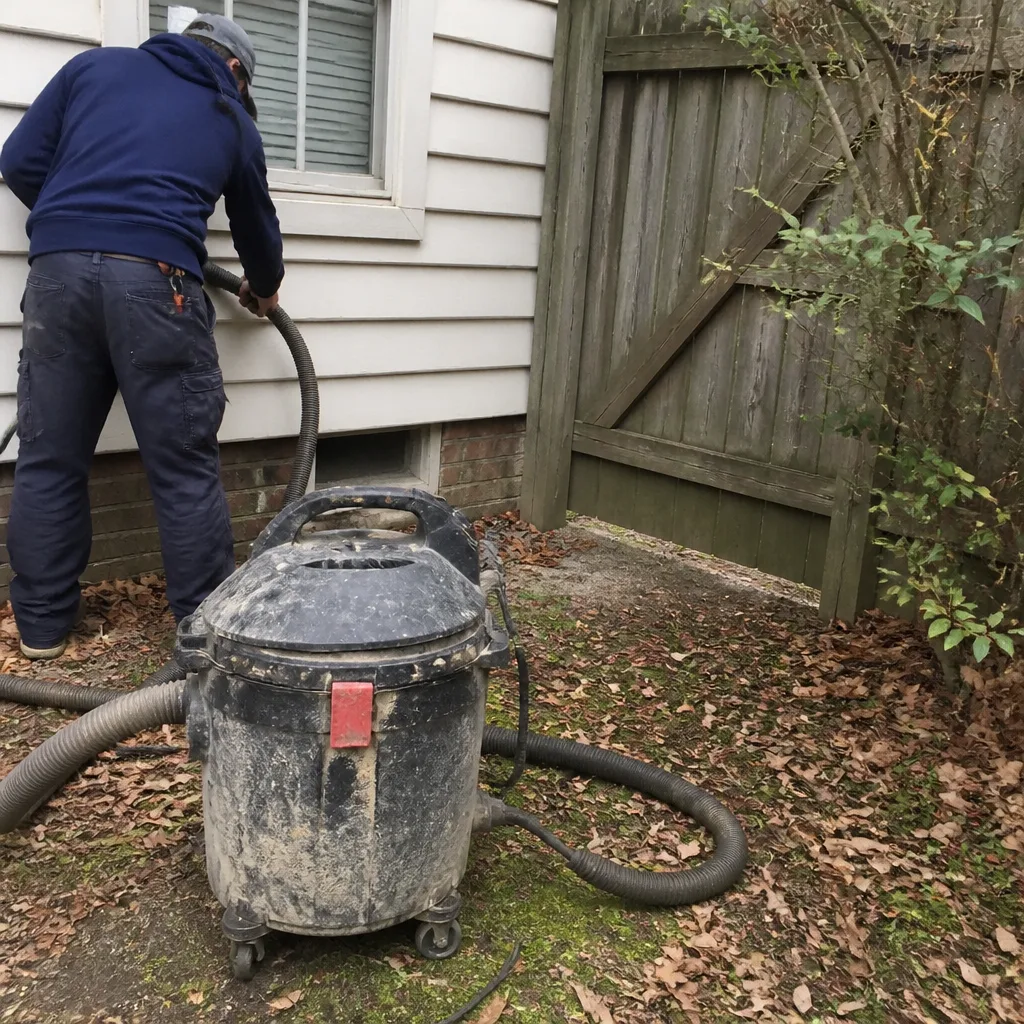 Before
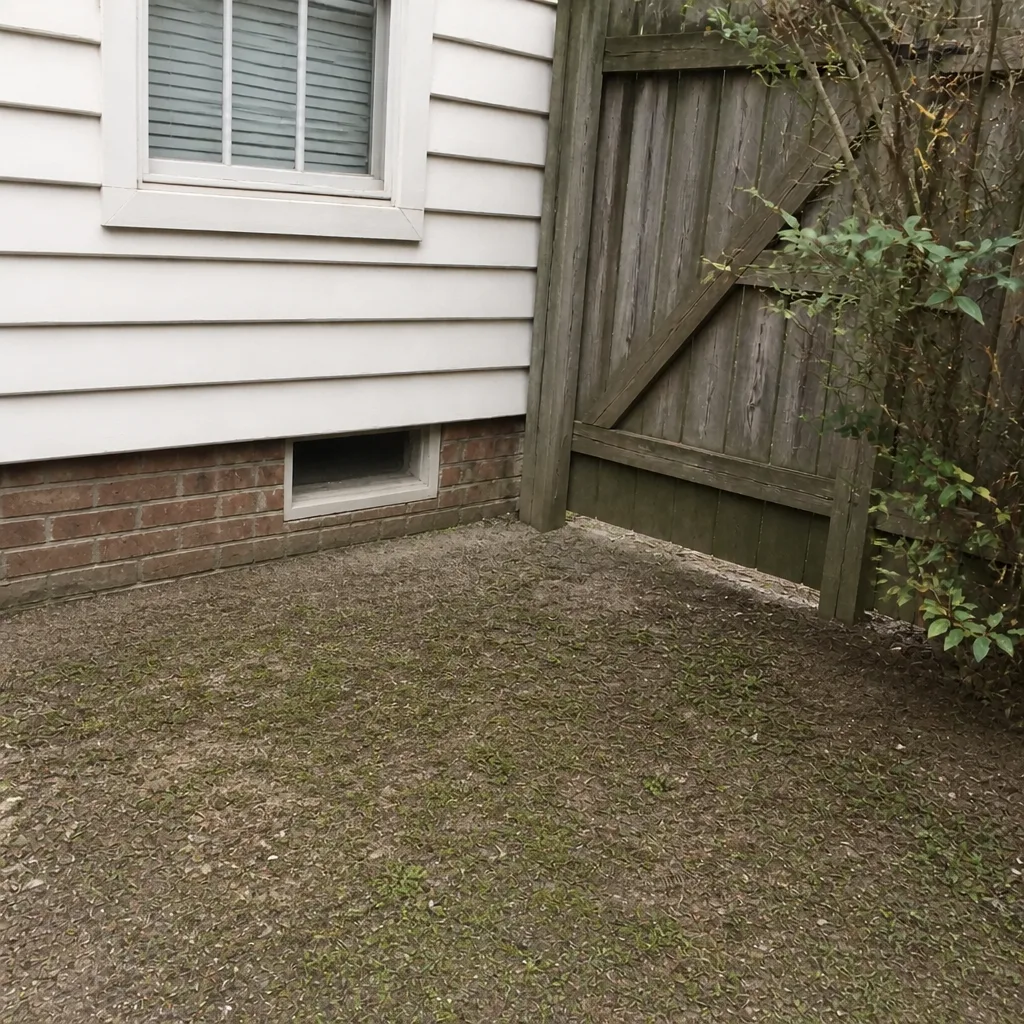 After
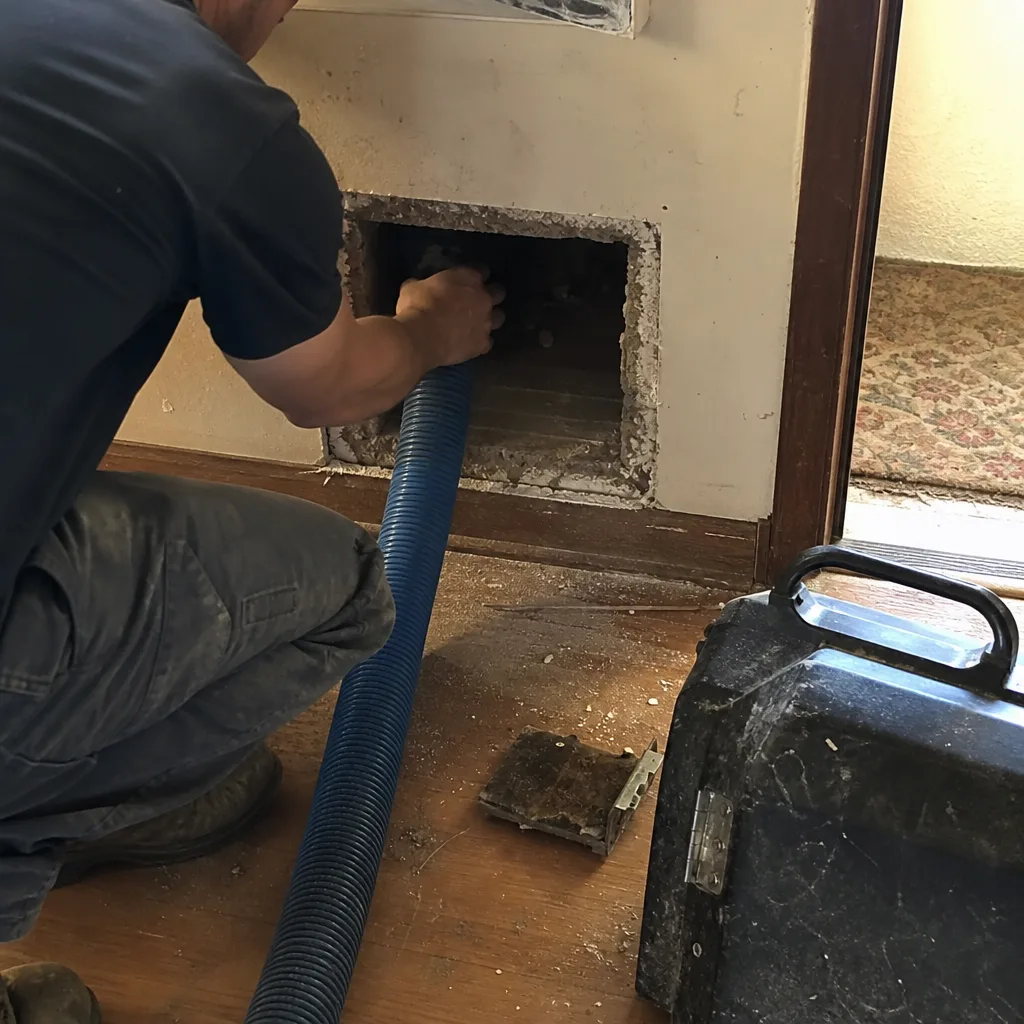 Before
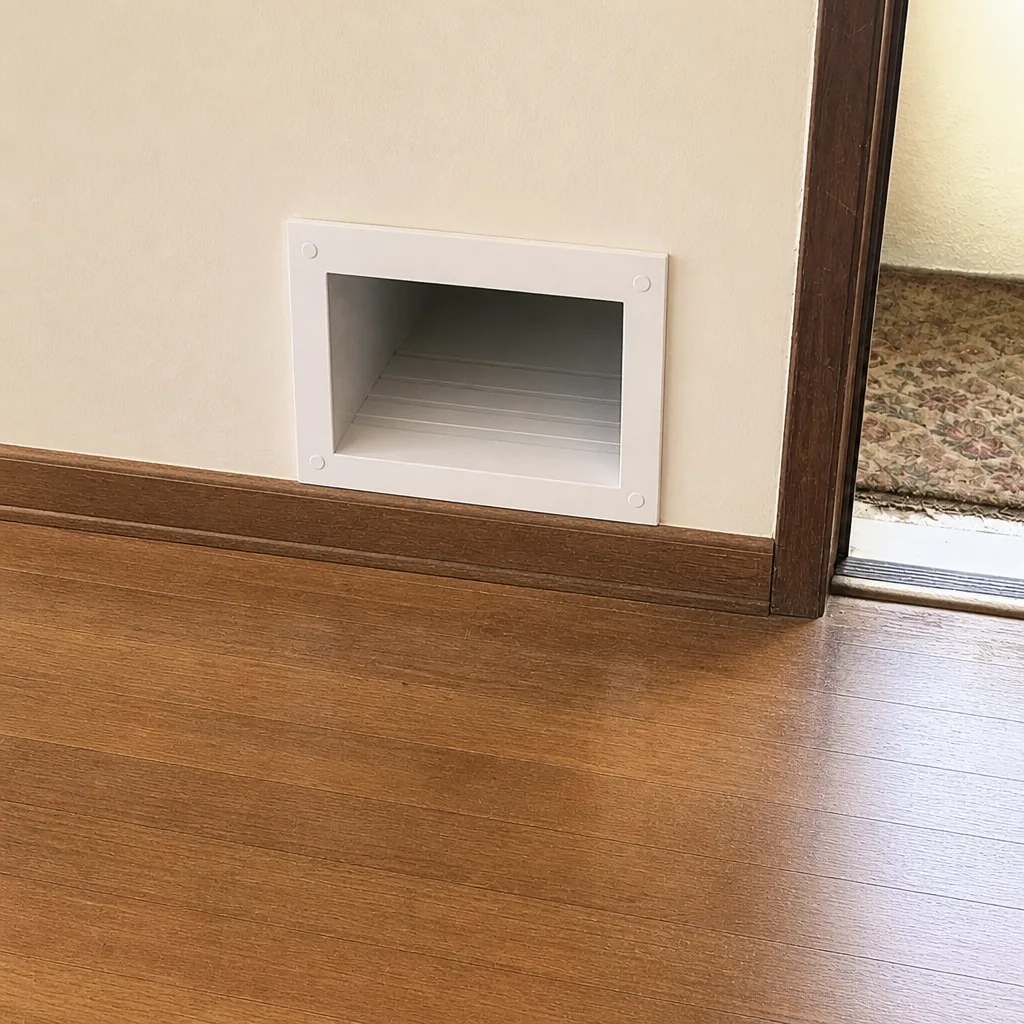 After
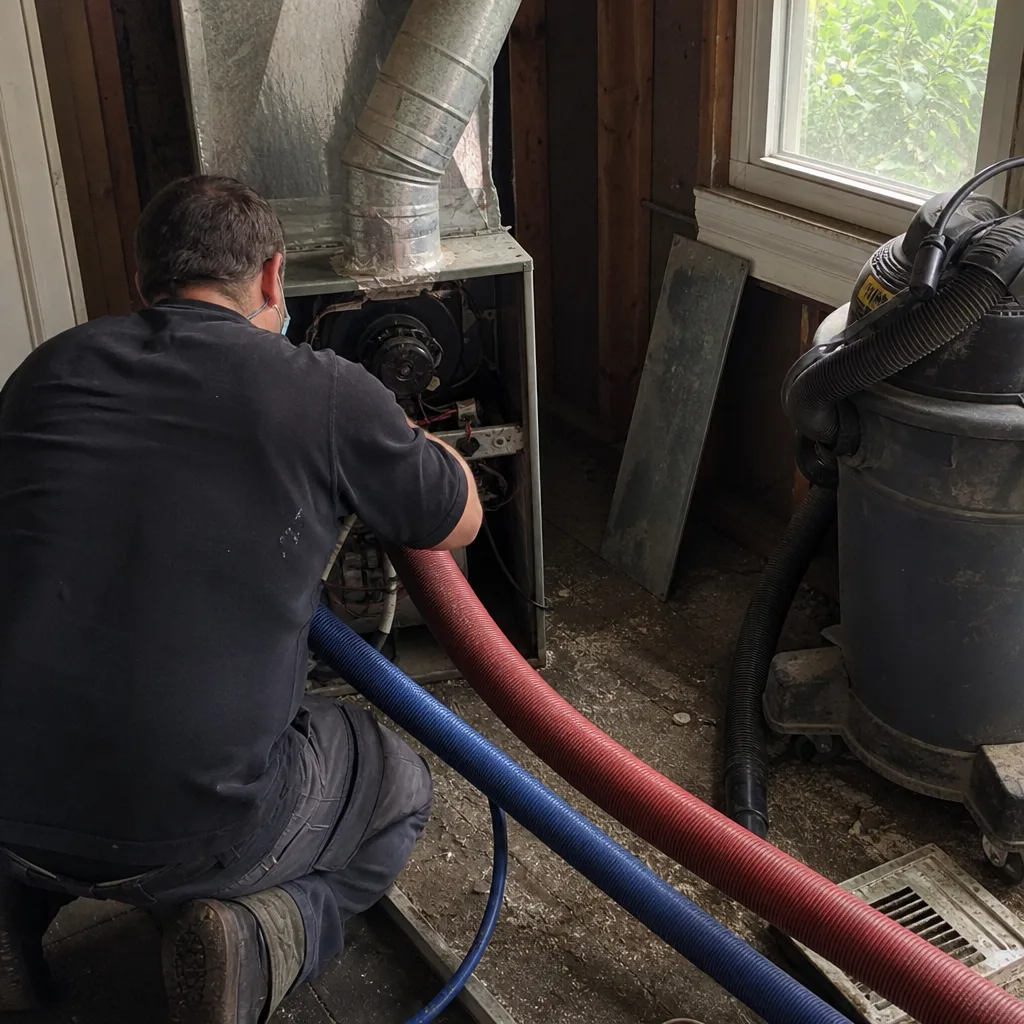 Before
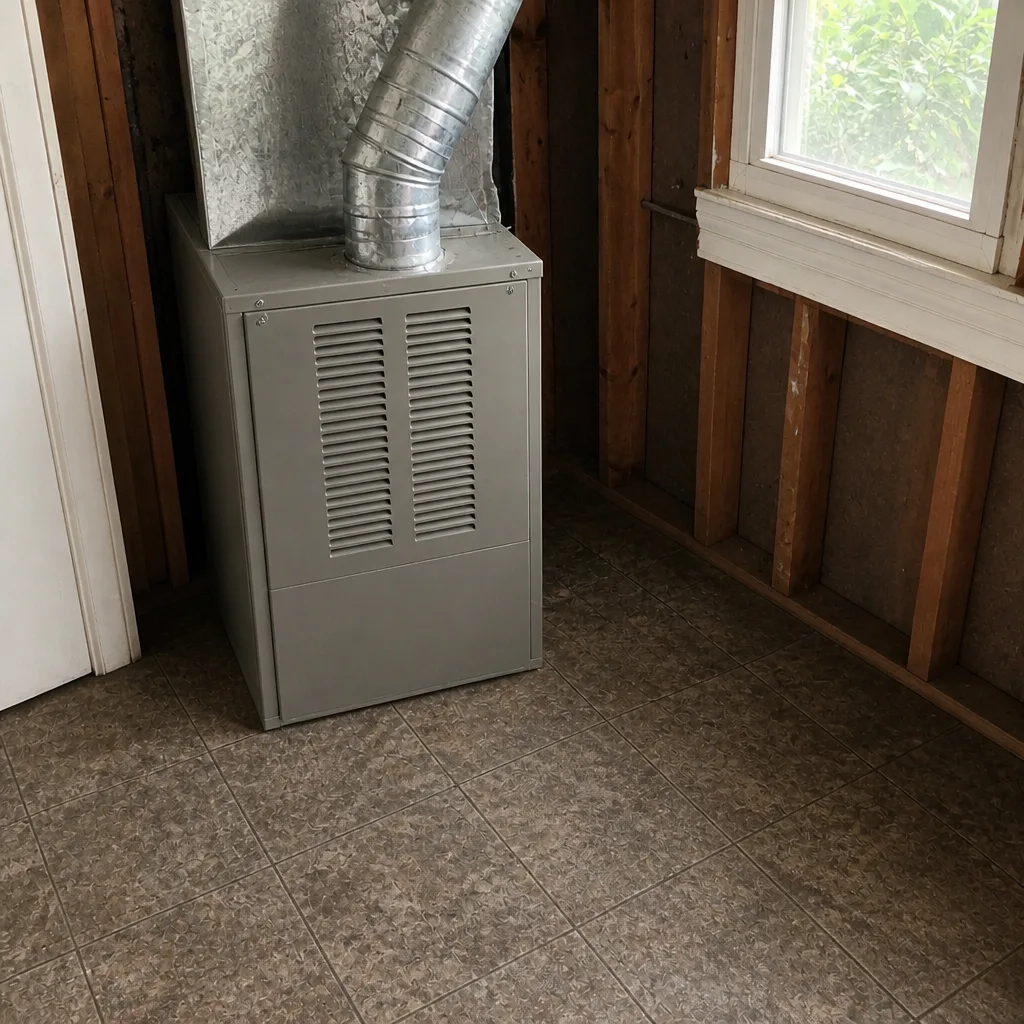 After
When to Call a Professional
Some jobs are yours to handle and some signal that it’s time for a full-system visit. Call when you see scattered dust settling fast in multiple rooms after a recent filter change, when a musty odor returns with the first heating run and doesn’t clear, when you find visible gaps or disconnected flex duct in a crawl space or attic, or when filters load dramatically faster than they used to. Call too if anyone in the home is dealing with worsening allergy or asthma symptoms, or if your dryer has started taking noticeably longer to finish a load. Air Duct Cleaning Sedgefield offers free estimates in Sedgefield. Call (833) 468-5694 and we’ll look at the whole system, not just the visible vents. We answer 24/7. Fast dispatch from 7am to 7pm, Sunday through Friday. Our technicians have up to 14 years of experience with full-system cleaning, repair, sealing, and sanitizing.
Frequently Asked Questions
There’s no fixed answer: most Sedgefield homes land between two and five years depending on their profile. Crawl-space homes, multi-pet households, and homes with allergy sufferers tend toward the two-to-three-year end, while slab homes with no pets can stretch to four or five. Adjust your interval using run time and moisture readings. Call (833) 468-5694 for an exact assessment.
A standard clean is mechanical: we agitate and extract the dust, debris, and organic film from the duct walls. Sanitizing adds a Guardsman antimicrobial treatment after cleaning to inhibit mold, bacteria, and odor at the duct surface, and we recommend it when there’s a signal like persistent odor, visible discoloration, or humidity staying above 60% RH. Call (833) 468-5694 to talk through which your home needs.
Yes, usually. A vented crawl space exposes the ducts above it to ground moisture and soil dust, and any gap in a flex connection becomes a direct entry point. That’s why we pair cleaning with duct repair and sealing in crawl-space homes, so the results hold. Call (833) 468-5694 for a free estimate.
Yes, and that’s usually the smarter way. Combining dryer vent cleaning with a duct visit means one appointment and one equipment setup, and you get both air pathways checked together. Call (833) 468-5694 to book both.
Look at signals rather than the calendar. Faster filter loading, a musty odor that returns, visible dust near registers, and humidity above 60% RH are all reasons to schedule sooner. If none of those show up and your home has a light load, you can wait. Call (833) 468-5694 and we’ll help you read the signs for free.
A full-system visit covers the whole air pathway: ducts, HVAC components, and dryer vents, with commercial-grade containment set up before work starts. We agitate with Rotobrush, extract with Nikro HEPA equipment, and use Abatement Technologies scrubbers to hold negative pressure so disturbed particulate doesn’t circulate in the home. Any leaks found get sealed. Call (833) 468-5694 for a free estimate and a look at the whole system.
The Bottom Line
The calendar number you’ve heard is a starting point, not a plan. In Sedgefield, the variables that move your interval most are crawl space construction, pet load, allergies, and the long HVAC run time this climate demands. Set your interval with the home-profile matrix, then refine it with a simple log of filter loading, energy bills, and humidity. Handle the between-visit tasks yourself (filters, register vacuuming, visual checks on accessible flex duct), and reserve the professional work for the full-system clean: containment, agitation, extraction, sealing, and sanitizing only where moisture and odor call for it. Match the schedule to your home, and the system stays ahead of the dust. Air Duct Cleaning Sedgefield is here to help set that schedule with a free estimate, and our team handles the whole air pathway in one appointment.
Ready to get your system back to a clean baseline? Call (833) 468-5694. We answer 24/7. Fast dispatch from 7am to 7pm, Sunday through Friday. Estimates are free, the price is set per job in writing before work starts, and we’ll walk you through the full-system scope so you know exactly what you’re getting.
Written by the team at Air Duct Cleaning Sedgefield.
Planning the rest of your system care? Start with the Air Duct Cleaning Sedgefield home page, then book air duct cleaning, dryer vent cleaning, and HVAC cleaning together for one appointment.